Master NAP Consistency to Dominate Local SEO

Ever notice how the smallest details can make or break a business’s online presence? We’ve seen it happen dozens of times: a talented web design agency with an impressive portfolio and glowing client testimonials somehow struggles to appear in local search results while their competitors monopolize the map pack.
The culprit? Inconsistent business information scattered across the internet like digital breadcrumbs leading nowhere. This isn’t just frustrating; it’s costing businesses real leads and revenue every single day.
For WordPress agencies serving clients across Canada and the United States, understanding NAP consistency, the practice of maintaining uniform Name, Address, and Phone number information across all online platforms, represents one of the most foundational yet frequently overlooked aspects of local search optimization.
While it might sound like basic housekeeping, the way search engines like Google interpret and trust your business data directly influences whether potential clients can find you when they’re actively searching for WordPress support, maintenance, or custom website solutions in their area.
Table of Content

What is NAP?
NAP stands for Name, Address, and Phone number—the three core pieces of information that identify your business across the digital landscape. Think of NAP as your business’s digital fingerprint. Just as your fingerprint uniquely identifies you as an individual, your NAP data helps search engines recognize and verify that various online mentions—on your WordPress website, Google Business Profile, industry directories, and review platforms—all refer to the same business entity.
When we talk about NAP in the context of local SEO, we’re specifically referring to how these three elements appear consistently across every platform where your business has a presence. For a WordPress web design agency based in Toronto, this might mean ensuring that “WP Expert Web Design” appears identically on your website footer, your Google Business Profile, your Yelp listing, your Facebook page, and dozens of other directories and citation sources.
The concept extends beyond simple data entry. NAP consistency means maintaining uniform, accurate versions of these details even when different platforms have different formatting requirements. While you don’t need identical formatting down to every punctuation mark, the substantive components must match closely enough that search engines can confidently treat them as referring to one business. For example, “123 Main Street, Suite 200” and “123 Main St. Ste 200” are generally close enough, but “123 Main Street, Toronto” and “456 Oak Avenue, Toronto” create confusion about whether these represent the same business or two different locations.
According to BrightLocal’s explanation of NAP, these citations can appear on general directories, industry-specific platforms, mapping services, social networks, and even in blog posts or press releases. Whether or not these mentions include a clickable link back to your website, they still contribute to how search engines understand and evaluate your business’s legitimacy and local relevance.
For WordPress agencies, NAP takes on additional significance because you’re simultaneously managing your own business information while often implementing and optimizing NAP data for clients on their WordPress sites. This dual role means you need both strategic understanding of why NAP matters for local visibility and technical knowledge of how to properly implement it within WordPress themes, plugins, and schema markup.
Why is NAP Consistency Important?
The importance of NAP consistency stems from how search engines evaluate trustworthiness and relevance in local contexts. When Google encounters multiple variations of what appears to be your business information, it faces a decision: which version is correct? If your website lists one phone number, your Google Business Profile shows another, and various directories display yet different contact details, search engines become uncertain about which data to trust and display in search results.
This uncertainty has real consequences. Research indicates that businesses with consistent NAP across major citation sources are approximately forty percent more likely to appear in Google’s local pack—those coveted top three local business listings that appear prominently in search results with map integration. For WordPress agencies competing in markets like Vancouver, Montreal, or Calgary, appearing in the local pack can mean the difference between a steady stream of qualified leads and being invisible to potential clients searching for “WordPress developer near me” or “website maintenance in [city].”
How NAP Affects Google’s Local Algorithm
Google’s local search algorithm operates on three fundamental pillars: proximity, relevance, and prominence. NAP consistency influences each of these in distinct ways that collectively determine your visibility in local search results.
Proximity calculations depend on accurate address information. If your address is incorrect, inconsistent, or missing entirely, Google struggles to place your business on the map correctly. This means you might miss out on ranking for nearby searches even when your services perfectly match what the searcher needs. For a WordPress support agency with an office in downtown Ottawa, imprecise location data could prevent you from appearing when business owners in your neighborhood search for immediate technical assistance.
Relevance is influenced by NAP consistency because it helps Google confidently link your website content to your business profile. When your WordPress site’s contact information matches your Google Business Profile and major citations, search engines can aggregate all the on-page signals—service descriptions, portfolio examples, blog content about WordPress solutions—under a single, coherent business entity. This coherence allows your content marketing efforts to fully contribute to local relevance.
Prominence is where NAP consistency exerts its most direct influence. Citations across reputable directories and local platforms serve as trust signals that communicate your business’s establishment and authority in your market. According to local search ranking factor studies, citations and related signals account for approximately nine percent of the factors that determine local pack rankings. While this might seem modest compared to other elements like on-page optimization or reviews, it represents a foundational layer that supports all other local SEO efforts.
Building Trust Through Entity Resolution
Search engines rely on what’s called “entity resolution”—the process of determining which references across the internet belong to the same real-world business. Your NAP data provides the stable set of attributes that enable this recognition. When NAP citations across directories, maps, and social platforms all match, search engines gain confidence that they describe your agency accurately, regardless of minor formatting variations.
This confidence translates into better aggregation of all the signals that contribute to your local prominence: customer reviews, backlinks from industry sites, mentions in WordPress community forums, and social media engagement. When NAP is inconsistent, these valuable signals might be fragmented across what search engines perceive as multiple, separate entities, diluting their collective impact on your rankings.
The trust dimension also affects how quickly search engines reflect changes to your business information. If you relocate your office, change your phone system, or rebrand your agency, inconsistent updates across various platforms create a mixed signal environment where no clear consensus emerges. Google may delay updating your local results or reduce your prominence until the confusion resolves. For agencies that need to maintain visibility during transitions, systematic NAP management across all platforms becomes critical.
User Experience and Conversion Impact
Beyond algorithmic considerations, NAP consistency directly affects whether potential clients can successfully contact or visit your business. We’ve worked with agencies that unknowingly lost leads because their website displayed an outdated phone number while their Google listing showed the current one. Prospective clients who found the business through directories ended up calling disconnected numbers, creating immediate negative experiences that cost conversions.
Consumer behavior research shows that approximately sixty-nine percent of people feel positively inclined to use a business after reading reviews describing positive experiences. However, this trust-building through reviews only works effectively when the business name, location, and contact information align across review platforms and your website. When clients research your agency and encounter conflicting information, it raises doubts about reliability—particularly problematic for WordPress agencies where clients must trust you with mission-critical website infrastructure.
For service-area businesses or agencies with remote teams serving multiple cities, accurate NAP also communicates geographic relevance without misleading potential clients. Properly configured service area settings combined with a reliable central phone number and city-level address allow you to rank for relevant local searches while maintaining transparency about how you operate. This approach respects both Google’s guidelines for representing your business and client expectations for honest communication.
Causes of Inconsistent NAP
Understanding why NAP inconsistencies develop helps agencies prevent them proactively rather than constantly reacting to problems after they’ve already damaged local visibility. Through our work managing WordPress sites and local SEO for clients across Canada, we’ve identified several common scenarios that create NAP fragmentation.
Business Evolution and Growth Changes
Many WordPress agencies start as freelance operations or small partnerships operating from home offices, then gradually evolve into established agencies with dedicated office spaces, expanded teams, and professional phone systems. Each transition point—moving from a residential address to a co-working space, then to a leased office; upgrading from a personal mobile number to a business line—creates opportunities for inconsistency if not managed systematically.
The challenge intensifies when agencies rebrand. A business that begins as “John’s WordPress Services” might later become “Digital Web Solutions” or merge with another agency under a new name. Unless every single citation, directory listing, social profile, and website reference gets updated simultaneously, a mixed landscape emerges where some sources reference the old brand while others show the new one. Search engines interpret these as potentially separate businesses, fragmenting the authority and prominence signals you’ve built over time.
Decentralized Information Management
In growing agencies, different team members often handle various aspects of online presence without coordinated NAP governance. Your marketing coordinator might update the website contact page, someone else manages Google Business Profile, another person handles social media, and yet another responds to directory listing requests. Without a centralized system ensuring everyone uses identical NAP formatting, subtle variations creep in: one person writes “Ave” while another spells out “Avenue,” one includes the suite number while another omits it, one uses hyphens in the phone number while another uses dots.
These seemingly minor differences accumulate across dozens or hundreds of platforms, creating exactly the kind of inconsistency that confuses search engines. Even when everyone has good intentions and accurate information, the lack of a single authoritative NAP source leads to fragmentation over time.
Third-Party Data Aggregators and Auto-Generated Listings
Business information doesn’t exist only where you manually enter it. Data aggregators like Infogroup, Localeze, Factual, and Foursquare collect business data from various sources and distribute it to hundreds of directories, apps, and platforms. If these aggregators have outdated or incorrect NAP information for your agency, that incorrect data propagates automatically across their entire network, creating widespread inconsistencies that you didn’t directly cause and might not even know exist.
Similarly, some platforms auto-generate business listings by scraping data from other sources or by using algorithms to interpret mentions of businesses in various contexts. These automated processes can introduce errors, outdated information, or duplicate listings with conflicting NAP data. Without regular monitoring and claiming of these listings, the incorrect information persists and undermines your NAP consistency efforts.
Technical Implementation Issues on WordPress Sites
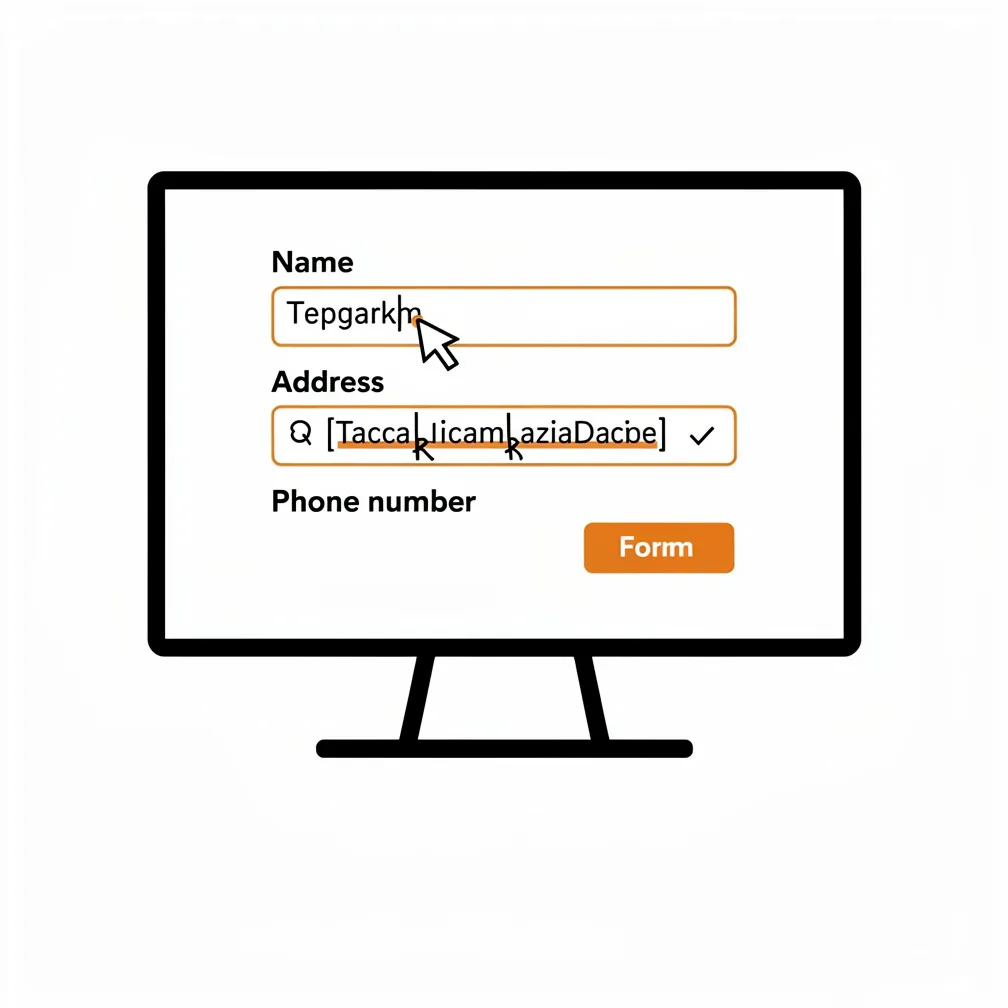
WordPress’s flexibility occasionally works against NAP consistency when website changes inadvertently alter how contact information displays. A theme update might change the footer template, replacing text-based NAP with an image that search engines can’t read. A page builder reconfiguration might result in address details appearing differently across various pages. Multilingual sites might translate or format NAP information inconsistently across language versions.
We’ve also seen situations where agencies maintain separate NAP implementations for different purposes—perhaps one version in the theme footer, another in a contact page plugin, and a third in schema markup—and these versions drift out of sync when updates occur. Without treating NAP as a single source of truth that gets referenced consistently across all implementations, these technical variations create the algorithmic confusion that harms local visibility.
Historical Baggage and Legacy Citations
Every WordPress agency accumulates a citation history over time. Early in your business lifecycle, you might have submitted your agency information to dozens of directories, many of which you’ve since forgotten about. These legacy citations persist indefinitely unless you actively identify and update or remove them. When your business information changes, these forgotten listings become sources of inconsistency that continue to confuse search engines years later.
Acquisitions, mergers, and partnerships further complicate the picture. If your agency acquires another WordPress shop or merges with a complementary business, you might inherit their entire citation footprint along with their client base. Reconciling two businesses’ worth of NAP data across potentially hundreds of platforms becomes a significant project that many agencies underestimate.
How To Achieve Consistent NAP
Establishing and maintaining NAP consistency requires both initial cleanup work and ongoing governance systems. Based on our experience helping WordPress agencies and their clients optimize for local search, we’ve developed a practical approach that balances thoroughness with efficiency.
Conduct a Comprehensive NAP Audit
Start by identifying every platform where your business information currently appears. Search for your business name, phone number, and address variations in Google, Bing, and other search engines. Check major platforms manually: Google Business Profile, Apple Maps, Bing Places, Facebook, LinkedIn, Yelp, and industry-specific directories relevant to web design and WordPress services. Use citation tracking tools like Moz Local, SEMrush, BrightLocal, or Whitespark to discover listings you might not find through manual searches.
Create a spreadsheet documenting each listing you find, noting the exact NAP information displayed and whether it matches your preferred standard format. This audit typically reveals patterns—perhaps most listings have the correct address but an old phone number, or your business name appears in multiple variations. Understanding these patterns helps you prioritize correction efforts and identify likely sources of ongoing inconsistency, such as outdated data aggregator records.
Don’t forget to audit your own WordPress website thoroughly. Check how NAP appears in your header, footer, sidebar, contact pages, location-specific landing pages, and any widgets or blocks that display business information. Verify that schema markup, if implemented, contains NAP data that matches your visible content. Tools like Google’s Rich Results Test can help you see how search engines interpret structured data on your site.
Define Your Standard NAP Format
Before correcting inconsistencies, establish exactly how your NAP should appear everywhere. Make deliberate choices about formatting details: Will you include or omit your suite number? Will you use abbreviations like “St.” or spell out “Street”? How will you format your phone number—with hyphens, dots, or parentheses? What’s your complete legal business name, and will you use it everywhere or employ a shorter “doing business as” version?
Your standard format should match what appears on your official business registration documents and what you’ve entered in Google Business Profile, as this profile often serves as a reference point for search engines. For Canadian businesses, ensure your address follows proper Canada Post conventions. For agencies operating in multiple locations, define distinct NAP standards for each office that will be consistently applied within that location’s citation ecosystem.
Document this standard format clearly and make it accessible to everyone in your organization who might need to enter business information anywhere. This single source of truth prevents the well-intentioned formatting variations that cause drift over time.
Prioritize and Correct Major Listings
With your audit complete and standard format defined, begin systematically updating listings, starting with the highest-impact platforms. Google Business Profile should be your first priority, as it directly feeds Google Search and Maps results and serves as a reference for other Google services. Claim and verify your profile if you haven’t already, then ensure every field contains accurate, current information matching your standard NAP format.
Next, address major business directories and data aggregators. Platforms like Yelp, Yellow Pages, Apple Maps, Bing Places, and Facebook have significant reach and influence. For Canadian businesses, platforms like Canada411 and other top Canadian citation sources are particularly important. Correcting information on data aggregators is especially valuable because it automatically updates hundreds of downstream listings that pull from these sources.
Many citation correction tools and services can expedite this process. Manual, direct-to-site submissions typically cost around two to three dollars per listing, while data aggregator access often bundles at approximately thirty dollars per aggregator annually. For WordPress agencies managing both their own NAP and client NAP data, services like BrightLocal, Moz Local, or Yext can provide efficiency at scale, though they represent a recurring investment.
Implement NAP Correctly on Your WordPress Site
Your agency’s website serves as both a citation source and a primary touchpoint for potential clients, making proper implementation critical. Ensure NAP appears as crawlable text rather than embedded solely in images or complex JavaScript elements. Footer areas, contact page sections, and dedicated location pages are common appropriate placements. The text should be visible to users but also accessible to search engine crawlers.
If you want to learn more about local SEO best practices for service businesses, our detailed guide covers strategic approaches specifically relevant to WordPress professionals. For agencies serious about local visibility, implementing structured data is also valuable. LocalBusiness schema markup with NAP fields that exactly match your visible content helps search engines understand and verify your business information with greater confidence.
WordPress plugins can assist with schema implementation—options like Local SEO Schema Generator or functionality built into comprehensive SEO plugins like Rank Math or Yoast can generate properly formatted structured data. However, always verify that plugin-generated schema actually contains your correct NAP rather than pulling from outdated settings or inconsistent sources. Our article on WordPress SEO for local markets explores implementation tactics in greater depth.
Establish Ongoing Monitoring and Governance
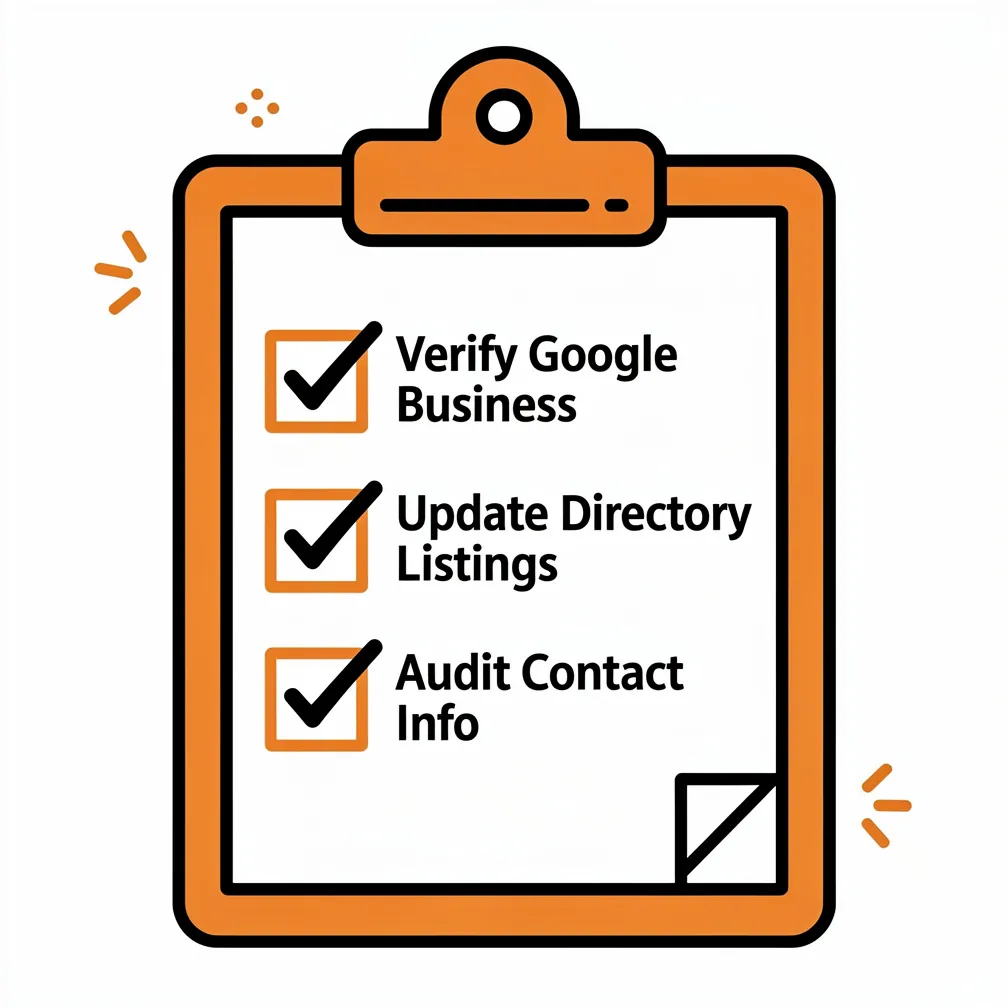
NAP consistency isn’t a one-time project but an ongoing responsibility. Business information changes, new platforms emerge, and third parties create new listings or update existing ones in ways you don’t control. Establish regular audit schedules—quarterly or semi-annually—to search for your business and verify that major listings still display consistent NAP.
Tools can help automate monitoring. Most citation management platforms offer alerts when they detect new listings or changes to existing ones. Google Search Console shows backlinks to your site, many of which may contain NAP mentions you should verify for consistency. Set up Google Alerts for your business name and phone number to catch new mentions as they appear online.
Internally, create a clear process for updating NAP whenever business changes occur. Designate a single person or role responsible for coordinating NAP updates across all platforms, or at minimum, maintain a checklist of every location that must be updated. When you change phone systems, move offices, or rebrand, treat comprehensive NAP updates as a required project component rather than an afterthought.
Integrate NAP with Review and Reputation Management
NAP consistency and reputation management reinforce each other. Reviews contribute significantly to local rankings and consumer decisions, but their value depends on search engines correctly associating them with your business. When your NAP is consistent across review platforms and your website, reviews consolidate under a single business profile, strengthening prominence signals.
Encourage satisfied clients to leave reviews on your Google Business Profile, where consistent NAP ensures those reviews directly support your local visibility. When clients mention your agency in testimonials or case studies on their own sites, provide them with your standard NAP format to ensure those mentions reinforce rather than fragment your digital identity. Consider reading our guide on responding to Google reviews to maximize the value of customer feedback.
If you encounter issues with your Google Business Profile—such as suspensions that can result from NAP discrepancies or other policy violations—address them promptly. Our resource on fixing Google Business Profile suspensions provides specific guidance for WordPress agencies navigating these challenges. Maintaining both NAP accuracy and platform compliance protects your visibility in the high-stakes local search environment.
FAQ: NAP Consistency for Local Businesses
Does my NAP have to be absolutely identical everywhere, down to every punctuation mark?
No, search engines understand common formatting variations. The key is that the substantive information—your actual business name, physical address, and phone number—must match. “123 Main Street” versus “123 Main St.” or “(555) 123-4567” versus “555-123-4567” are generally fine. However, different business names, different street addresses, or different phone numbers create real confusion that can harm rankings.
Can I hide my home address if I run my WordPress agency from home?
For privacy-conscious home-based businesses, Google allows service-area business configurations where you define your service region without displaying a physical street address publicly on your profile. However, you still need to provide an address to Google during verification. On your website and other platforms, you can choose to display just your city, postal code, and phone number rather than your full street address while still maintaining consistency in what you do show.
What if I’m rebranding or moving? Should I update everything at once?
Ideally, yes. The more quickly you can update all major platforms simultaneously, the less time you spend in an inconsistent state. However, if immediate comprehensive updates aren’t feasible, prioritize Google Business Profile, your website, and major directories first, then systematically work through smaller citations. Document your timeline and try to complete all updates within a few weeks to minimize the inconsistency period.
How often should I audit my NAP consistency?
For most WordPress agencies, quarterly or semi-annual audits strike a good balance between thoroughness and efficiency. If your business is actively growing, opening new locations, or undergoing significant changes, more frequent monthly checks make sense. At minimum, perform an audit whenever you change any NAP component—new phone number, office move, or rebrand.
Do I need to hire a service to manage citations, or can I do it myself?
Both approaches work, depending on your resources and priorities. Manual citation building and correction is time-consuming but free beyond any directory submission fees. Citation management services cost money but save time and often provide better coverage and ongoing monitoring. Many agencies start by manually addressing major listings themselves, then consider services for broader coverage or ongoing management as their business and budget grow.
What’s more important for local rankings: NAP consistency or getting lots of reviews?
Both matter, but they serve different functions. NAP consistency is foundational—it helps search engines understand your business identity and properly associate all other signals, including reviews, with your profile. Reviews directly influence both rankings and consumer decisions. Think of NAP as the infrastructure that allows reviews and other prominence signals to reach their full potential. Without NAP consistency, even excellent reviews might not fully benefit your visibility if search engines can’t confidently connect them to your business.
Can inconsistent NAP actually cause my Google Business Profile to be suspended?
While NAP inconsistencies alone don’t typically trigger suspensions, they can contribute to situations where Google questions your business’s legitimacy, particularly if combined with other factors like using virtual offices, having multiple listings for the same location, or discrepancies between your stated business type and your actual operations. Maintaining accurate, consistent NAP across your website and profile reduces the risk of raising red flags during Google’s verification and quality processes.
I found dozens of old listings with incorrect information. Do I need to update every single one?
Prioritize quality over quantity. Focus first on high-authority platforms that Google trusts—your Google Business Profile, major directories like Yelp, Apple Maps, and Bing Places, relevant industry directories, and data aggregators. Correcting information on data aggregators has a multiplier effect since they feed hundreds of smaller directories. For obscure, low-traffic listings, you might simply note their existence and address them during routine audits rather than treating them as urgent priorities.
Should my WordPress agency have separate NAP listings for each service location?
If you have genuine physical offices with staff in multiple locations, yes—create separate Google Business Profiles with distinct NAP data for each, and build location-specific citations. If you’re a single-location agency serving multiple cities, configure your profile as a service-area business with one NAP and defined service regions. Avoid creating fake locations just to appear in multiple cities, as this violates Google’s guidelines and risks penalties.
How do I implement NAP on my WordPress site for optimal SEO?
Include your NAP as crawlable text in visible locations like your footer, sidebar, or contact page. Ensure it exactly matches your Google Business Profile data. Consider adding LocalBusiness schema markup that includes your NAP information, which helps search engines understand and verify your business details. Avoid embedding NAP only in images or using dynamic elements that might not be consistently crawlable. Most importantly, maintain the same NAP format across all pages and any location-specific content.
NAP consistency represents one of those rare optimization opportunities where relatively straightforward work—establishing accurate, uniform business information and maintaining it systematically—produces disproportionate benefits for local visibility, user trust, and conversion. For WordPress agencies competing for clients in Canadian and US markets, treating NAP as critical infrastructure rather than administrative minutiae can mean the difference between showing up prominently when potential clients search or remaining invisible while competitors capture those opportunities. The agencies that succeed in local search are often those that master these fundamentals before chasing more sophisticated tactics.
Frequently Asked Questions
Why is NAP such a big deal if my agency already has good reviews and a strong portfolio?
Even with glowing reviews and an impressive portfolio, inconsistent NAP can quietly undermine your visibility. When your name, address, or phone number vary across your website, Google Business Profile, and directories, search engines struggle to trust and connect all those signals. That confusion means fewer map pack appearances, less local traffic, and wasted reputation equity—your hard-earned reviews and content simply don’t work as hard for you as they could.
How can inconsistent NAP actually cost my WordPress agency leads?
Inconsistent NAP often shows up as practical, painful problems: prospects call an old number they find in a directory, drive to a previous office location, or get confused by mixed branding in search results. Even a single outdated listing can send potential clients into a dead end. That experience erodes trust, drives them to competitors, and turns what should be qualified local leads into missed opportunities your agency rarely notices directly.
What are the most common ways growing agencies accidentally mess up their NAP?
NAP issues almost always crop up during growth: moving from home office to coworking space to leased office, switching phone systems, or rebranding from a solo freelancer to a full agency. Each change introduces new variations across your website, social profiles, and directories. Without one “source of truth” and a clear update process, these transitions leave a trail of conflicting names, addresses, and numbers scattered across the web.
I’m overwhelmed by old, scattered citations—what’s the most practical way to start cleaning them up?
Begin with a focused NAP audit rather than trying to fix everything blindly. Search for your business name, address, and phone number variations, then log every listing in a simple spreadsheet. From there, define your standard NAP format and tackle high-impact platforms first: Google Business Profile, major directories, and key data aggregators. This structured approach turns a chaotic tangle of citations into a manageable project with clear priorities.
How do I avoid WordPress-related technical issues that break NAP consistency on my site?
On WordPress, problems usually arise when NAP is duplicated or buried. Keep one authoritative NAP version and reuse it in your footer, contact page, and schema markup rather than maintaining separate copies. Make sure it’s text, not just an image, and check after theme or builder updates that the format hasn’t changed. For multilingual or multi-location setups, define clear rules so each language or office uses the right, consistent NAP everywhere.