Master the 7 Cs Framework for Website Success
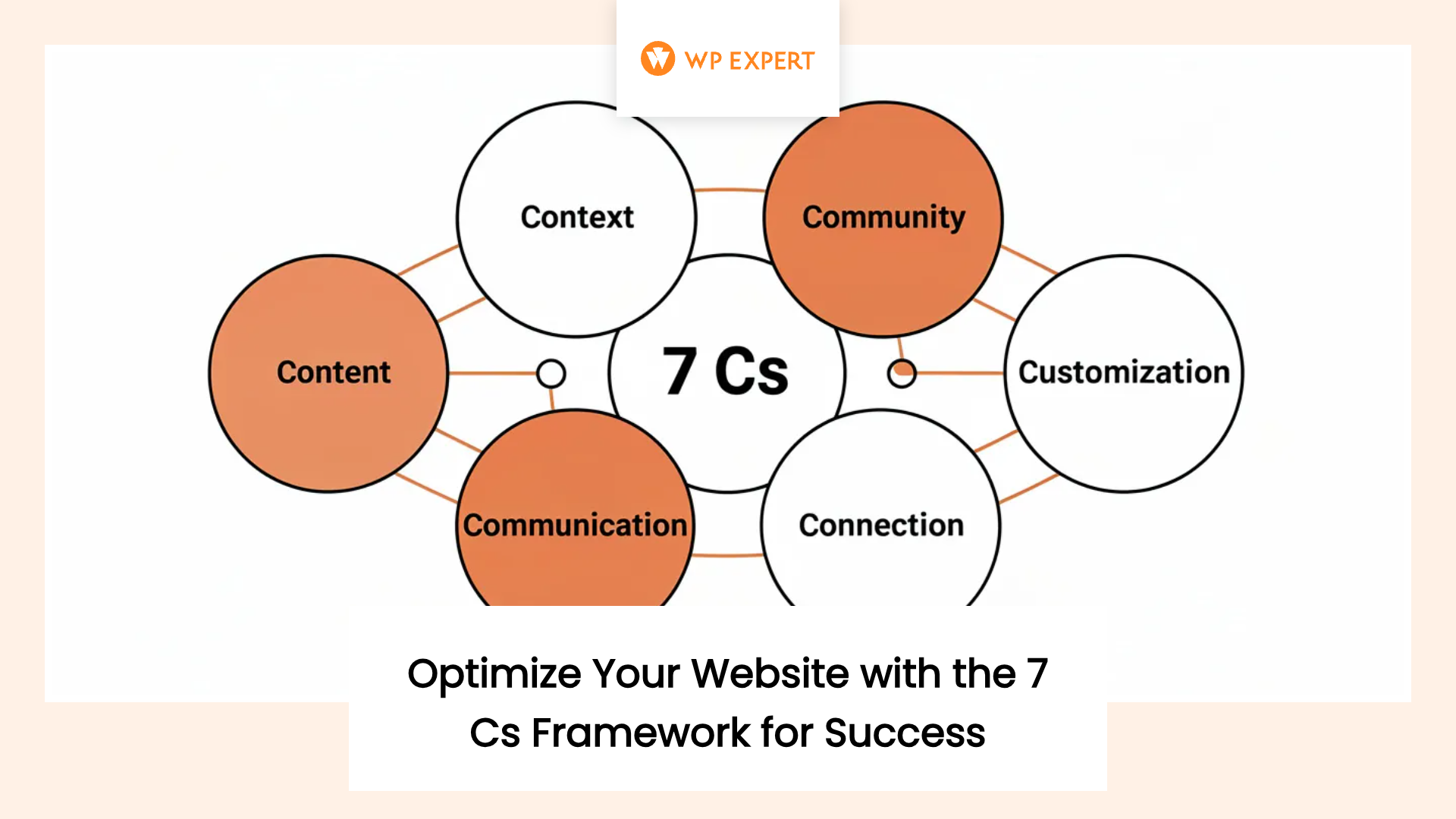
Picture this: You’ve just invested thousands of dollars into a new website, but visitors are leaving faster than they arrived, your conversion rate is flatlining, and your competitor’s less polished site is somehow getting better results. Frustrating, right? The problem might not be what’s on your website—it’s what’s missing from your strategic foundation. Enter the 7 Cs framework, a powerful methodology that separates forgettable websites from those that generate actual business results.
The 7 Cs of website design isn’t just another marketing buzzword that sounds impressive in meetings. Originally developed by Rayport and Jaworski, this framework has become the blueprint for creating websites that don’t just look good—they work. For small and medium-sized businesses trying to compete online, understanding and implementing these seven elements can mean the difference between a website that’s a digital brochure gathering dust and one that’s your hardest-working salesperson.
Table of Content
Let’s break down each of these critical components and explore how they work together to create websites that attract visitors, keep them engaged, and turn them into customers.
Context: Your Website’s First Impression and Functional Foundation
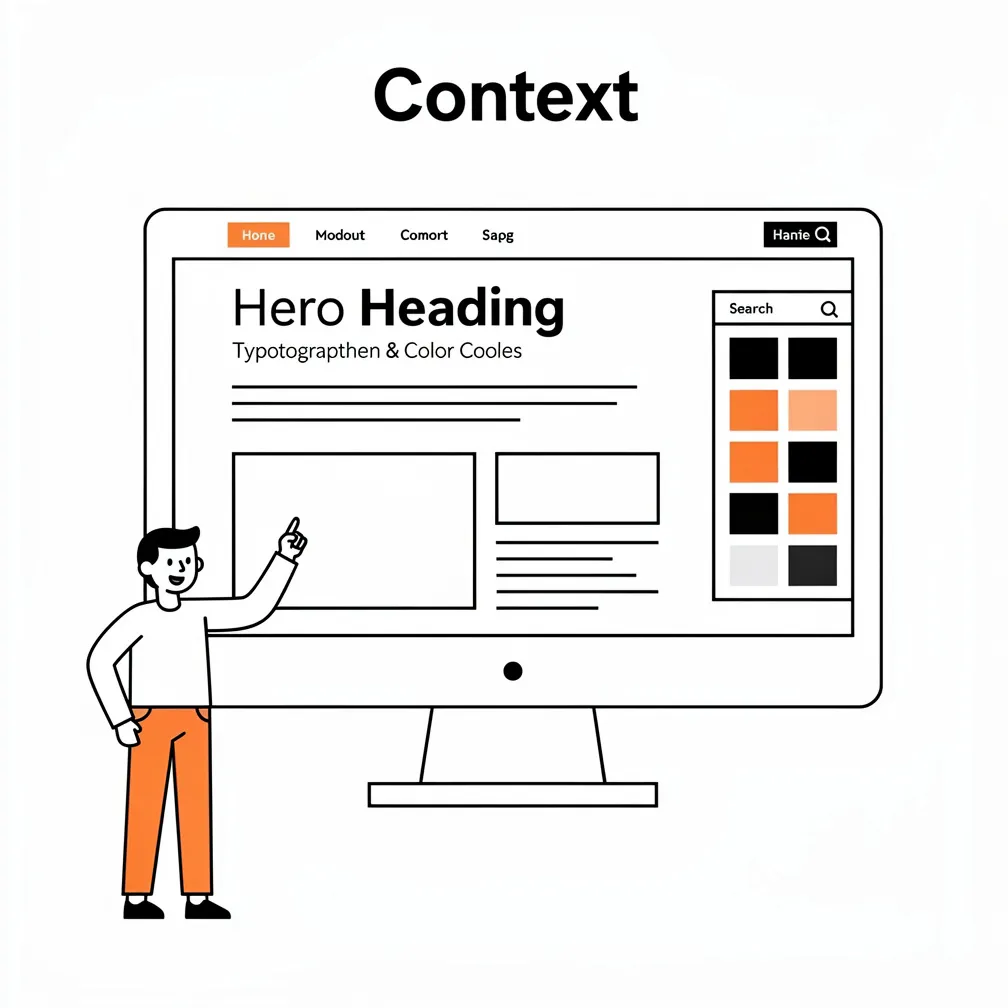
Context refers to the overall aesthetic design, layout, and functional structure of your website. Think of it as the architectural blueprint that dictates everything from color schemes and typography to navigation patterns and page hierarchy. This isn’t about making things “pretty”—it’s about creating an environment where your brand identity comes to life and visitors instinctively know how to navigate.
When we work with clients, we often see businesses that have confused context with decoration. They’ve added flashy animations or followed design trends without considering whether these elements align with their brand or serve their audience. The result? A disconnected experience that confuses visitors rather than guides them.
Effective context means your website’s design instantly communicates who you are, what you do, and how visitors should interact with your content. For a law firm, this might mean clean lines, professional typography, and a structured layout that conveys trust and authority. For a creative agency, it could involve bold colors, dynamic layouts, and unexpected interactive elements that showcase innovation.
The layout component of context is particularly crucial. Your website structure determines how easily visitors can find information and complete desired actions. Poor navigation is one of the fastest ways to lose potential customers—research shows that 38% of people will stop engaging with a website if the layout is unattractive or difficult to navigate.
Context also encompasses responsive design. With mobile devices accounting for more than half of all web traffic, your website’s context must adapt seamlessly across screen sizes. A desktop layout that looks stunning but becomes unusable on a smartphone fails the context test entirely.
Content: The Substance That Drives Value and Visibility
If context is your website’s skeleton, content is its heart and soul. This pillar includes all the information you provide to visitors—text, images, videos, infographics, and downloadable resources. Content serves a dual purpose: it must engage human visitors while also satisfying search engine algorithms that determine whether your site deserves to rank in search results.
The content on your website needs to accomplish several objectives simultaneously. It must answer the questions your target audience is asking, establish your expertise and credibility, guide visitors toward conversion actions, and include the keywords and semantic signals that search engines use to understand what your pages are about.
We’ve seen countless businesses treat content as an afterthought—something to fill space between design elements. This approach wastes one of your most powerful tools for attracting and converting customers. Strategic content addresses specific pain points your audience experiences, provides genuine value rather than thin promotional copy, and uses language and terminology your customers actually use when searching for solutions.
Quality trumps quantity every time. A website with ten comprehensive, well-researched pages that thoroughly address customer needs will outperform a site with fifty shallow pages that barely scratch the surface. Search engines have become increasingly sophisticated at recognizing genuine value, and thin content is now a liability rather than a strategy.
Content also plays a critical role in establishing thought leadership. When potential customers are researching solutions, they’re looking for providers who truly understand their challenges. Detailed case studies, how-to guides, and industry insights demonstrate expertise in ways that generic marketing copy never can. This is particularly important for modern marketing teams trying to build authority in competitive markets.
Beyond written content, visual elements carry enormous weight in user experience. High-quality images, explanatory videos, and custom graphics make complex information more digestible and keep visitors engaged longer. Studies show that people remember 65% of visual information three days later, compared to just 10% of written information.
Community: Building Connections Beyond Transactions
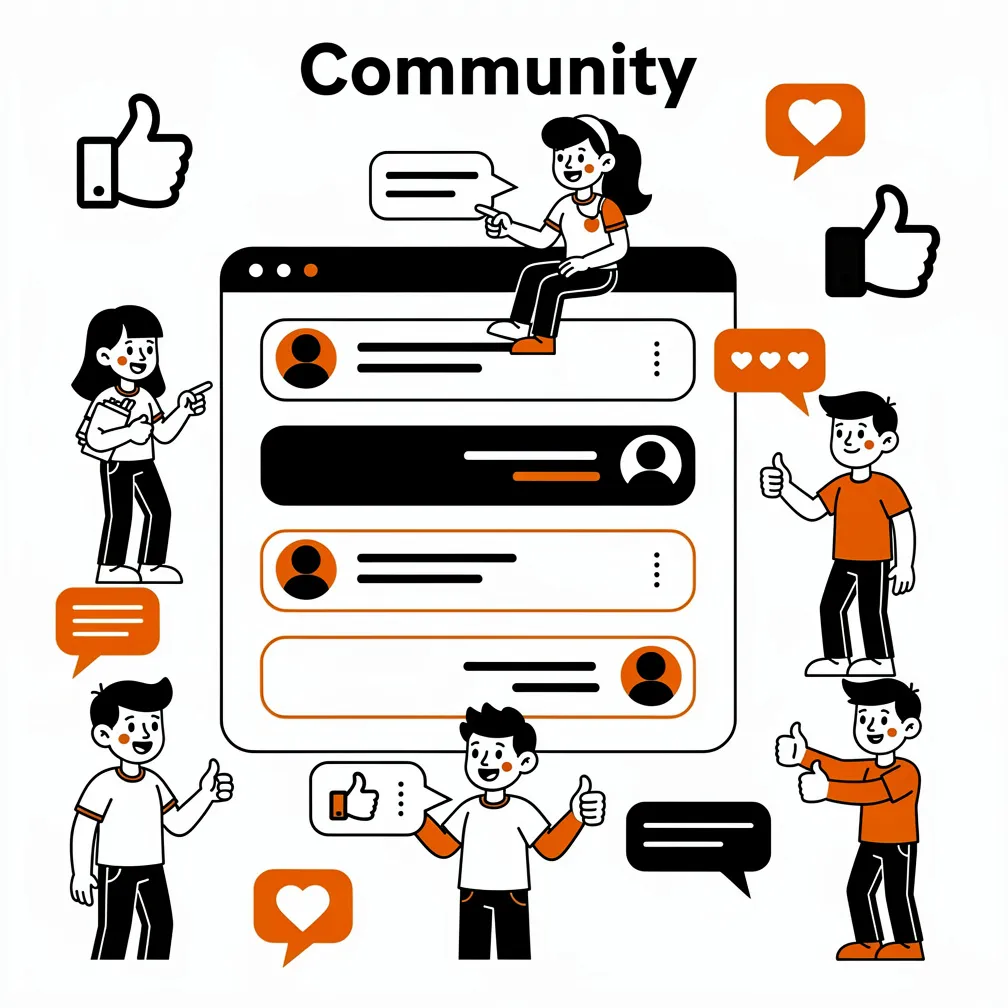
The community pillar addresses how your website facilitates connections between visitors and your brand, or among visitors themselves. This element transforms your website from a static information source into a dynamic platform where relationships develop and deepen.
Community features can range from simple comment sections and social media integrations to sophisticated forums, user-generated content platforms, and member communities. The right approach depends entirely on your business model and audience expectations.
For B2B companies, community might manifest as a knowledge base where customers share implementation tips and best practices. For e-commerce businesses, it could be product reviews and ratings that help shoppers make confident purchasing decisions. For service providers, it might be client testimonials and before-after galleries that demonstrate real results.
Social proof is the currency of online trust, and community features are where that currency is minted. When potential customers see real people engaging with your brand, sharing positive experiences, and recommending your solutions, it carries exponentially more weight than any marketing message you could craft.
However, community features require commitment. A blog with comments disabled, a forum with unanswered questions, or social feeds that haven’t been updated in months send negative signals about your engagement and vitality. If you’re going to incorporate community elements, you must have the resources to nurture and moderate them.
We often recommend starting small with community features and expanding as you develop the capacity to manage them effectively. A handful of detailed, authentic testimonials will serve you better than an abandoned forum or neglected social integration.
Customization: Personalizing the User Experience
Customization refers to a website’s ability to tailor the experience for individual users based on their preferences, behaviors, or characteristics. This pillar has grown increasingly important as users have come to expect personalized digital experiences in every aspect of their online lives.
At its simplest level, customization might include features that let users adjust text size, switch between light and dark modes, or set language preferences. These basic accommodations make your site more accessible and user-friendly for diverse audiences.
More sophisticated customization uses data to adapt content, product recommendations, and messaging based on user behavior. E-commerce sites excel at this—showing products related to past purchases, highlighting items left in abandoned carts, or surfacing content based on browsing history.
For service-based businesses, customization might involve showing different homepage content to first-time visitors versus returning customers, or presenting case studies from industries that match the visitor’s company profile. Marketing automation platforms can integrate with your website to deliver personalized experiences based on lead scores, previous interactions, or demographic data.
The key to effective customization is subtlety. Users should experience the benefits without feeling like they’re being tracked or manipulated. Transparent data practices and respect for privacy preferences are essential for maintaining trust while delivering personalized experiences.
Customization also extends to how content is delivered across devices. A truly customized experience recognizes whether someone is browsing on a desktop during work hours or scrolling on a mobile device during their evening commute, and adapts accordingly.
Communication: Enabling Meaningful Two-Way Dialogue
Communication encompasses all the mechanisms through which your website facilitates interaction between you and your visitors. This is where passive information consumption transforms into active engagement and relationship building.
The communication pillar includes contact forms that actually work and route inquiries to the right people, live chat features that provide immediate assistance during decision-making moments, email newsletter signups that keep your brand top-of-mind, chatbots that answer common questions around the clock, and clear calls-to-action that guide visitors toward next steps.
Effective communication design balances accessibility with respect for user autonomy. Yes, you want to make it easy for interested visitors to connect with you—but aggressive tactics like popups that appear after three seconds or chat widgets that expand automatically create frustration rather than engagement.
We’ve found that the businesses seeing the best results from website communication features are those that think strategically about timing and context. A popup offering a relevant resource after someone has spent five minutes reading a detailed article feels helpful. The same popup appearing before someone has even read your headline feels intrusive.
Response time is a critical but often overlooked aspect of website communication. If someone submits a contact form and doesn’t receive even an automated acknowledgment for 24 hours, your communication system has failed regardless of how beautifully designed the form might be. Setting proper expectations and delivering on them builds trust and credibility.
Communication features should also acknowledge the reality of modern consumer behavior—people research across multiple sessions and devices before making decisions. Your communication strategy needs to support this journey rather than demanding immediate commitment. Email nurture sequences, retargeting campaigns, and progressive content offers all extend the communication established through your website.
Connection: The Technical Infrastructure Enabling Integration
Connection refers to the technical infrastructure that links your website to other platforms, systems, and content. This includes internal linking structures that help visitors navigate related content, external backlinks that establish authority and drive referral traffic, API integrations with CRM systems, email platforms, and analytics tools, third-party service connections for payments, shipping, or appointment scheduling, and cross-device functionality that creates seamless experiences across touchpoints.
For WordPress websites—which power more than 43% of all sites on the internet—the connection pillar is both an advantage and a potential complexity. The platform’s extensive ecosystem of plugins and integrations makes it possible to connect virtually any service or tool, but poor implementation can create performance issues, security vulnerabilities, and maintenance headaches.
Internal linking strategy deserves particular attention because it serves multiple purposes. For users, well-planned internal links help them discover related content and navigate deeper into your site. For search engines, internal links establish information hierarchy and distribute ranking authority across your pages. For conversion optimization, strategic internal linking guides visitors along paths that lead to desired actions.
External connections through backlinks remain one of the most powerful ranking factors in search engine algorithms. When authoritative sites link to your content, they’re essentially vouching for your credibility and expertise. Building these connections requires creating content worth linking to and actively promoting that content to relevant audiences.
Technical connections also determine how well your website plays with the rest of your marketing technology stack. Can form submissions automatically create CRM records? Do email signups sync with your marketing automation platform? Can customer purchases trigger fulfillment workflows? These integrations eliminate manual data entry, reduce errors, and enable sophisticated automation that would be impossible with disconnected systems.
Site speed, which is partially determined by how efficiently your site connects to external resources, has direct impact on both user experience and search rankings. Pages that load in one second have a conversion rate three times higher than pages that take five seconds to load. Optimizing connections—from image hosting to font loading to API calls—is essential for performance.
Commerce: Facilitating Transactions and Business Objectives
The commerce pillar encompasses everything related to transactions and business goal completion on your website. While this obviously includes e-commerce functionality for businesses selling products online, commerce applies more broadly to any action that moves visitors toward becoming customers.
For online retailers, commerce means shopping cart functionality, product catalogs with detailed specifications, secure payment processing, shipping calculators and checkout optimization, and inventory management integration. But for service businesses, commerce takes different forms—appointment booking systems, quote request forms, service package selection, proposal downloads, and free consultation scheduling.
The critical element across all commerce functionality is reducing friction in the conversion process. Every additional step, required field, or moment of uncertainty increases the likelihood that a potential customer will abandon the process. Research shows that 70% of online shopping carts are abandoned before purchase, often due to unexpected costs, complicated checkout processes, or security concerns.
We emphasize to our clients that commerce optimization isn’t about tricking people into buying—it’s about removing obstacles for people who have already decided they want to become customers. Clear pricing information, transparent policies, multiple payment options, and streamlined forms all contribute to higher conversion rates.
Trust signals are particularly important for the commerce pillar. Security badges, testimonials near conversion points, money-back guarantees, and professional design all contribute to the confidence needed to complete transactions. For businesses dealing with sensitive information or significant purchase amounts, establishing credibility isn’t optional—it’s the difference between completing a sale and watching a qualified lead slip away.
The return on investment from commerce optimization can be dramatic. Small improvements to conversion rates compound across all your traffic, marketing spend, and content efforts. A website converting at 3% instead of 2% generates 50% more customers from the same traffic investment.
Analytics and testing are essential components of effective commerce. You need to understand where potential customers are dropping off in your conversion processes, which messages resonate most effectively, and which offers generate the best response. Without this data, you’re essentially flying blind, making decisions based on assumptions rather than evidence.
Bringing the 7 Cs Together: A Holistic Approach to Website Success
Understanding each of the 7 Cs individually is valuable, but the real power emerges when you recognize how they interact and reinforce each other. A website that excels in one or two areas while neglecting others will always underperform its potential.
Consider how context and content work together—stunning design with weak content creates an impressive but ultimately hollow experience, while valuable content buried in poor design never reaches its intended audience. Or how community and commerce integrate—user reviews and testimonials (community) directly influence purchase decisions (commerce) in ways that traditional marketing can’t match.
When we approach website projects, we use the 7 Cs framework as both a design methodology and an audit tool. During planning, we ensure the strategy addresses all seven pillars. During development, we regularly check that our work maintains balance across these elements. After launch, we use the framework to identify optimization opportunities and prioritize improvements.
For businesses managing their own websites or evaluating potential partners, the 7 Cs provide a useful lens for assessment. When reviewing your site or proposals from agencies, ask yourself how each pillar is being addressed. A proposal focused entirely on visual design (context) while ignoring content strategy or conversion optimization (commerce) is incomplete, regardless of how impressive the mockups might look.
The framework also helps prioritize website improvements when resources are limited. Rather than random updates or chasing trends, you can evaluate which of the 7 Cs represents the biggest gap or opportunity for your specific situation. A site with strong content but poor communication features might prioritize adding live chat or improving contact forms. A site with solid commerce functionality but weak community could benefit from adding testimonials and case studies.
It’s worth noting that the relative importance of each C varies by business model and audience. An e-commerce site will naturally emphasize commerce and customization more heavily than an informational site for a professional service firm. A B2C company targeting consumers might invest more in community features than a specialized B2B supplier. The framework isn’t a rigid checklist—it’s a flexible foundation that adapts to your specific needs and goals.
Implementing the 7 Cs: Practical Next Steps
If you’re looking at your current website and realizing it’s falling short on several of the 7 Cs, don’t panic. Website excellence is a journey, not a destination. Even sites that excel today require ongoing attention and optimization to maintain their effectiveness.
Start by conducting an honest assessment of where your site stands on each pillar. Rate yourself on a scale of one to ten for each C, and be specific about what’s working and what isn’t. This creates a baseline for measuring improvement and helps identify priority areas.
For small businesses without unlimited budgets, we recommend focusing initial efforts on the pillars that most directly impact your business goals. If you’re struggling to generate leads, prioritize communication and commerce. If you’re getting traffic but high bounce rates, focus on context and content. If you have customers but little repeat business, look at community and customization.
Many improvements to the 7 Cs don’t require complete redesigns. Strategic enhancements—better internal linking (connection), improved product descriptions (content), streamlined checkout processes (commerce), or added testimonials (community)—can deliver measurable results without starting from scratch.
However, there comes a point where incremental improvements reach diminishing returns and a more comprehensive approach makes sense. If your site is more than three to five years old, built on outdated technology, or fundamentally misaligned with current business goals, a strategic redesign addressing all 7 Cs simultaneously may be the most efficient path forward. A comprehensive 90-day optimization plan can systematically address gaps across all pillars while maintaining your existing site’s functionality.
When working with clients on website projects, we emphasize that launching the site is the beginning, not the end. The 7 Cs framework requires ongoing attention and optimization. Regular content updates keep the content pillar fresh. A/B testing refines commerce processes. New community features can be added as resources allow. Connection infrastructure expands as business needs evolve.
One often-overlooked aspect of implementation is measurement. How will you know if improvements to each pillar are actually working? Establish clear metrics tied to each C—traffic and engagement metrics for content, conversion rates for commerce, bounce rates and time-on-site for context, response rates for communication. Without measurement, you’re optimizing in the dark.
The Competitive Advantage of the 7 Cs Framework
In an environment where Canadian small businesses are increasingly competing on digital platforms, a website built on the 7 Cs framework provides significant competitive advantages. While your competitors are focused on isolated tactics—adding a chatbot here, refreshing colors there—you’re operating from a comprehensive strategy that ensures all elements work together.
This holistic approach becomes particularly valuable as customer expectations continue to evolve. Today’s users have been trained by experiences on sophisticated platforms like Amazon, Netflix, and Google. They expect websites to be fast, intuitive, personalized, and valuable. Sites that deliver clunky experiences or treat their website as a static brochure increasingly struggle to compete.

The 7 Cs framework also provides a common language for discussing website strategy across teams and with partners. Instead of vague requests to “make it pop” or “improve engagement,” you can have specific conversations about strengthening the community pillar through user-generated content or enhancing the connection pillar through better internal linking. This precision leads to better outcomes and more efficient projects.
For businesses working with web design agencies, understanding the 7 Cs helps you evaluate whether you’re getting comprehensive strategic guidance or just visual design services. An agency partner that thinks in terms of these integrated elements will deliver fundamentally different—and more valuable—results than one focused purely on aesthetics.
The framework also helps future-proof your website investment. Technology, design trends, and best practices will continue evolving, but the fundamental principles behind the 7 Cs remain constant. A site built on this foundation can adapt to changes more easily than one constructed around temporary trends or tactical requirements.
Ultimately, the 7 Cs of website design represent the difference between a website that’s an expense and one that’s an investment. When all seven pillars work together effectively, your website becomes a powerful business asset that attracts qualified traffic, engages visitors, builds trust, and converts browsers into customers. That’s not just good design—it’s good business.
Whether you’re planning a new website, evaluating your current one, or considering improvements, use the 7 Cs as your roadmap. The businesses seeing the best results from their online presence aren’t necessarily those spending the most money—they’re the ones thinking strategically about how every element of their website serves their audience and advances their business goals. That’s the power of this framework, and that’s why it remains relevant more than two decades after it was first introduced.
Frequently Asked Questions
What are the 7 Cs of website design, and why do they matter?
The 7 Cs are Context, Content, Community, Customization, Communication, Connection, and Commerce. Together, they form a framework for building a website that does more than look good—it helps visitors find what they need, trust your brand, and take action. The article argues that businesses often focus on visuals alone, but real results come from balancing all seven pillars.
Why is context so important if my website already looks polished?
Context is about the website’s layout, structure, navigation, and overall design—not just appearance. A site can look attractive and still fail if visitors can’t quickly understand where to go or how to act. The article emphasizes that poor navigation and weak mobile responsiveness can drive people away fast, even when the design itself seems impressive.
How does content help a website generate leads instead of just filling space?
Content gives your website substance by answering real customer questions, showing expertise, and supporting search visibility. The article stresses that strong content should solve pain points, use the language your audience actually searches for, and provide genuine value rather than thin promotional copy. Quality content also helps build trust through case studies, guides, and useful visuals that keep visitors engaged longer.
What’s the difference between communication and community in the 7 Cs framework?
Community is about building trust and connection among visitors and your brand through things like testimonials, reviews, comments, or forums. Communication is about direct two-way interaction, such as contact forms, live chat, chatbots, and email signups. The article notes that both matter, but they serve different pain points: community builds social proof, while communication helps visitors get answers and move forward.
How can a small business improve commerce without rebuilding the whole website?
You do not need a full redesign to improve commerce. The article recommends reducing friction with clearer pricing, simpler forms, stronger trust signals, and smoother checkout or booking flows. Small changes like better product descriptions, fewer required fields, or more visible testimonials near conversion points can make a noticeable difference in results. For many businesses, these targeted fixes are the fastest path to higher conversions.