How WordPress Empowers Modern Marketing Teams
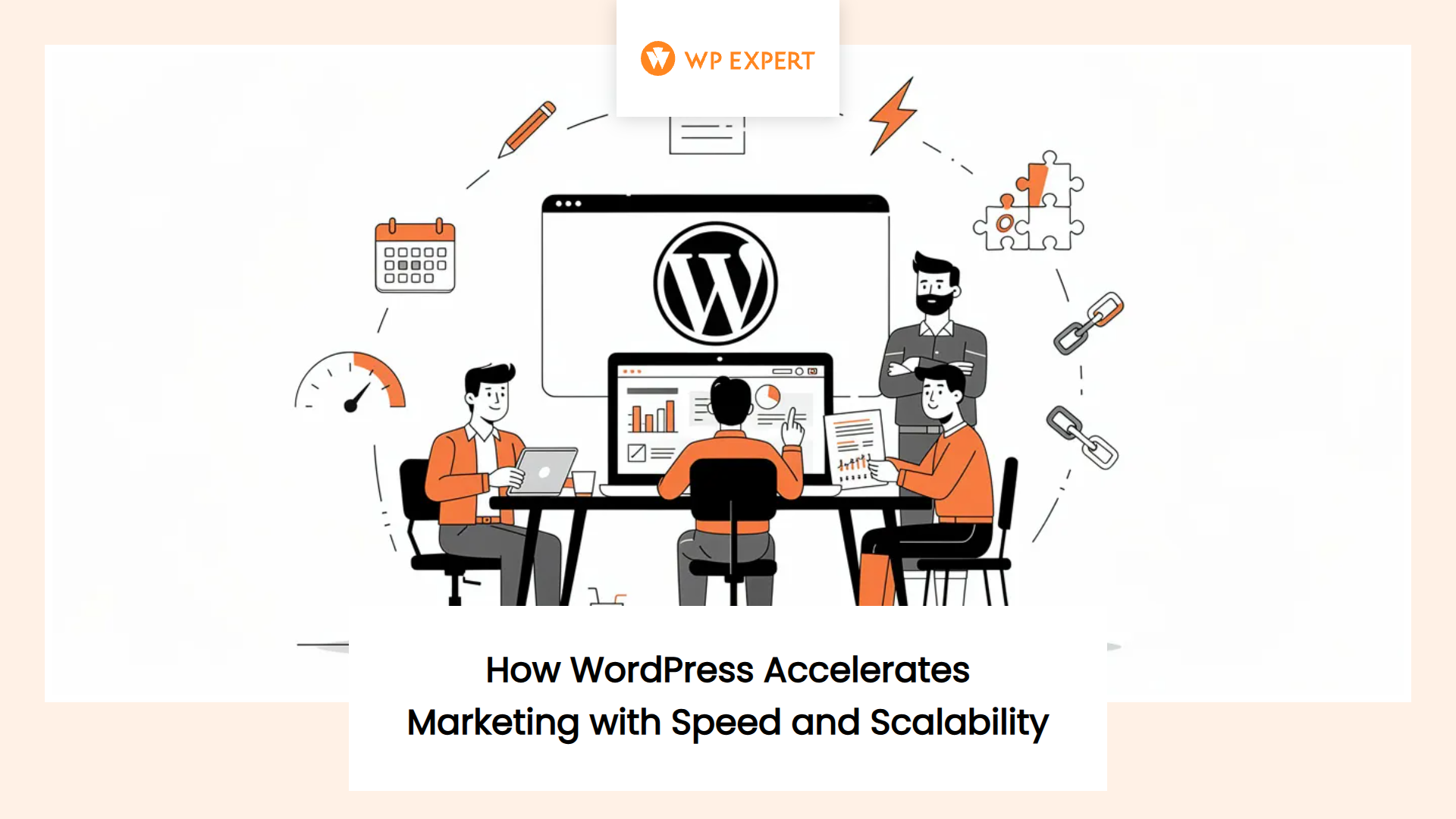
Modern marketing teams don’t lose sleep because their content management system is inadequate: they lose sleep because their competitors launched a campaign three weeks ago, their landing page is still in development, and they just found out the redesign they’ve been waiting for got bumped behind four other projects. Speed kills in marketing, but it’s not usually the kind that wins races. We’ve watched brilliant marketing strategies wither because the technology couldn’t keep pace with the ideas. WordPress changed that equation, not by being perfect, but by removing the friction that transforms ambitious marketing plans into months-long development cycles.
Table of Content
Why WordPress Became the Default Choice for Marketing Teams
When WordPress powers over 43% of all websites globally and commands over 60% of the content management system market, that dominance isn’t accidental. Marketing teams and agencies choose WordPress because it solves real operational problems that directly impact campaign velocity and team productivity. The platform reduced time-to-market for marketing initiatives from weeks to days, eliminated developer bottlenecks that stalled content publishing, and created an ecosystem of integrated tools that work together instead of requiring constant custom development.

The United States leads WordPress adoption with approximately 18.7 million WordPress websites, representing 22.51% of global WordPress traffic. For marketing agencies operating in North America, this concentration creates practical advantages. When we recommend WordPress to a client, they’re choosing a platform their competitors probably use, their marketing team has likely encountered, and the talent pool understands thoroughly. This familiarity reduces sales friction and accelerates project timelines because we’re not selling a novel technology: we’re implementing a proven system.
The real competitive advantage emerges when marketing teams recognize that WordPress isn’t just a publishing platform. It’s the operational foundation that enables rapid experimentation, seamless integration with marketing automation systems, and architecture that scales without requiring expensive platform migrations. When we work with clients who’ve experienced the constraints of proprietary content management systems, they immediately understand the value proposition. One client moved from a legacy CMS that required a developer ticket for every content update to WordPress with the Gutenberg block editor. Their content team went from publishing two blog posts weekly to publishing daily, not because they hired more writers, but because they eliminated the approval workflows and technical dependencies that created publishing bottlenecks.
Speed as a Strategic Marketing Advantage
Campaign velocity determines market share in competitive industries. The marketing team that launches first captures attention, defines messaging, and forces competitors to respond rather than lead. WordPress evolved specifically to support this velocity through architecture that enables non-technical users to make sophisticated content changes without developer intervention. The Gutenberg block editor provides a visual interface where content creators build pages, modify layouts, and manage design systems directly.
We’ve implemented WordPress solutions for clients where the speed advantage translated directly to revenue impact. An e-commerce client needed to launch seasonal landing pages for twelve different product categories, each with unique messaging, visuals, and conversion optimization. Under their previous system, this would have required custom development for each landing page, consuming weeks of developer time and creating project dependencies. With WordPress and reusable block patterns, their marketing team created all twelve landing pages in three days. They launched, measured performance, identified the top-converting variations, and optimized the underperforming pages, all within the same timeframe their old system would have required just to start development.
This speed advantage compounds over time because teams can run more experiments, test more variations, and iterate based on performance data rather than intuition. According to research on how WordPress supports modern marketing teams, the platform’s flexibility enables teams to launch experiments and campaigns without waiting through lengthy development cycles. When testing becomes operationally simple, marketing teams test more frequently, which means they discover winning strategies faster than competitors constrained by technical limitations.
Integration Capabilities That Unify the Marketing Technology Stack
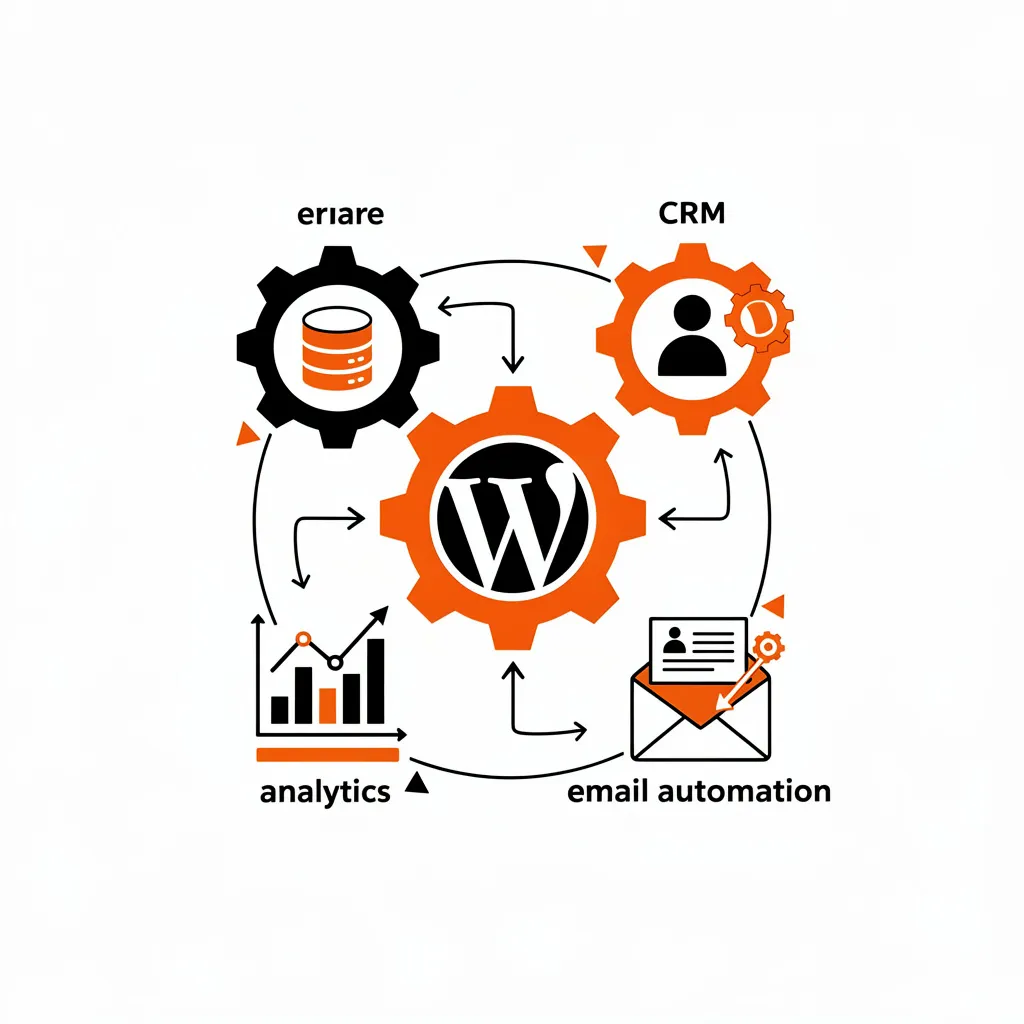
Modern marketing operates across interconnected systems, customer relationship management platforms, email marketing automation, analytics dashboards, advertising platforms, and content management. The effectiveness of these systems depends on how seamlessly data flows between them. WordPress integrates with the entire marketing technology ecosystem through native connections, third-party plugins, and API-based workflows that ensure customer data remains synchronized and accessible.
CRM Integration Creates Complete Customer Journey Visibility
Customer relationship management systems serve as the central repository for customer data, interaction history, and lifecycle stage tracking. WordPress connects to platforms like HubSpot, Salesforce, and Brevo through native integrations and through specialized tools that enable bidirectional data synchronization. When a prospect fills out a form on a WordPress landing page, that information automatically enters the CRM with appropriate tagging and segmentation. When that prospect receives follow-up emails, visits the website again, and engages with content, all activity gets logged to their CRM record, creating a complete customer journey history.
We implemented this integrated approach for a B2B services client who struggled with disconnected data across their website, email platform, and CRM. Leads entered through website forms but remained invisible to their sales team until someone manually exported them from WordPress and imported them to their CRM. This manual process created delays, introduced data errors, and meant high-intent leads sat uncontacted for days. After implementing WordPress with proper CRM integration, form submissions triggered immediate CRM records, assigned leads to appropriate sales representatives based on territory rules, and initiated automated email sequences, all without human intervention. Their sales team responded to inquiries within minutes instead of days, which increased their close rate by 23% simply by eliminating the operational delays that previously cost them opportunities.
Email Marketing Automation That Drives Customer Lifecycle Engagement
Email marketing delivers an average return on investment of $42 for every dollar spent, making it the highest-performing marketing channel for most businesses. WordPress-native email marketing plugins enable marketing teams to execute sophisticated campaigns entirely within WordPress, eliminating separate platforms and the data synchronization complexity they create. Tools like FluentCRM integrate directly with WordPress users, allowing teams to segment subscribers based on user roles, engagement history, and behavioural data.
For a marketing resource perspective, this automation represents revenue generation that requires no ongoing labor investment beyond the initial setup. You can learn more about implementing these workflows in our guide to WordPress marketing automation.
Analytics and Performance Measurement That Inform Strategy
Marketing effectiveness depends on accurate performance measurement and the ability to make data-driven decisions quickly. WordPress analytics integrations ensure marketing teams can measure what matters without leaving WordPress to check separate analytics platforms. SiteKit and similar tools integrate Google Analytics directly into the WordPress dashboard, providing traffic data, content performance metrics, and visitor behaviour insights within the same interface where content gets created and published.
The practical impact extends beyond convenience. When marketing teams see performance data immediately adjacent to content creation workflows, they make faster decisions about what content to create, which topics resonate with audiences, and which campaigns drive qualified visitors. We encourage clients to review their analytics regularly through our comprehensive WordPress analytics guide, which demonstrates how integrated analytics become tactical tools for real-time decision-making rather than weekly reports that arrive after decisions need to be made.
For clients in regulated industries or those concerned about data privacy, privacy-focused alternatives like Plausible Analytics and Matomo provide lightweight analytics without the complexity and compliance issues associated with Google Analytics. These platforms deliver essential performance insights without extensive tracking infrastructure, which simplifies privacy policy documentation and reduces compliance burden.
Content Collaboration Features That Accelerate Publishing Workflows
As marketing teams grow, managing content workflows becomes increasingly complex. Multiple creators draft content, multiple reviewers provide feedback, compliance teams ensure regulatory adherence, and approvers sign off before publication. Without proper workflow management, content sits waiting for reviews, feedback gets lost in email chains, and publication deadlines slip as content waits for approvals.
WordPress 6.9 introduced Notes; a block-level commenting system that enables asynchronous collaboration directly in the content editor. Rather than switching between WordPress and external collaboration tools, teams leave threaded comments attached to specific blocks, mark discussions as resolved, and notify colleagues through email. For marketing teams managing complex editorial workflows with multiple reviewers and stakeholders, this feature eliminates context-switching friction. Content creators draft in WordPress, editors provide feedback in WordPress, compliance reviewers leave notes in WordPress, and content never leaves the system.
Performance Optimization as a Revenue Driver
Website performance directly impacts marketing effectiveness because page speed affects both search rankings and conversion rates. Google’s Core Web Vitals, Largest Contentful Paint, Interaction to Next Paint, and Cumulative Layout Shift, influence search rankings, meaning faster sites receive better organic visibility. More importantly, every additional second of page load time reduces conversion rates by 7-14%. A website that loads in two seconds converts significantly better than one that loads in four seconds, regardless of marketing message quality.
WordPress hosting and optimization infrastructure matured to support these performance requirements through managed hosting providers that combine server-side caching, content delivery networks, and performance monitoring. Modern WordPress hosting ensures sites achieve Core Web Vitals targets, which means landing pages, product pages, and conversion-focused content load fast enough to convert. We can now guarantee performance levels to clients because WordPress combined with optimized hosting provides the technical foundation needed to meet performance standards.
The relationship between performance and marketing extends beyond conversion rates. When marketing campaigns drive traffic to fast-loading pages, those visitors generate lower bounce rates, higher engagement, and better behavioral signals, which improves advertising performance metrics and reduces customer acquisition costs. Agencies that combine WordPress with performance optimization create a virtuous cycle where content performs better, which improves acquisition efficiency, which justifies higher marketing budgets. Our WordPress ROI optimization guide demonstrates how performance improvements translate directly to measurable revenue impact.
Scalability for Growing Marketing Operations
Marketing teams grow as businesses expand, which means the platform supporting marketing operations must scale without requiring expensive migrations or platform replacements. WordPress scales from single-site implementations to enterprise multisite networks managing hundreds of websites across multiple brands, geographies, and business units.
Multisite Architecture for Multi-Brand Management
WordPress Multisite allows a single WordPress installation to power multiple websites, each with its own content, users, and domain, while sharing core WordPress code, plugins, and themes. This architecture enables shared functionality, consistent branding, faster deployment, and simplified maintenance across entire website portfolios. Major enterprises like Penske Media Corporation run 22-brand portfolios including Variety, Rolling Stone, and Billboard through unified WordPress implementations, collectively serving 179 million monthly active users.
For agencies managing expanding client portfolios, Multisite creates efficiency advantages that reduce operational costs and enable faster project delivery. We use Multisite architecture for clients operating multiple locations or brands because code reuse reduces development effort, security updates deploy once rather than separately to each site, and design system changes roll out across all properties instantly. One multi-location retail client operates 15 location-specific websites through a single WordPress Multisite network. When they update their product catalog, service offerings, or promotional campaigns, those changes deploy to all 15 locations simultaneously instead of requiring manual updates to each location’s website.
Artificial Intelligence Integration That Multiplies Team Capacity
WordPress AI integration represents the next evolution of marketing team efficiency. Rather than replacing marketing professionals, WordPress AI tools augment capabilities by accelerating routine tasks while preserving human creativity and strategic judgment. AI-powered features reduce manual effort for repetitive content tasks while maintaining human control over quality, brand voice, and strategic direction.
The WordPress AI infrastructure enables workflows like automatic headline generation, meta description writing, internal linking suggestions, and content clustering recommendations. An editor can draft a blog post and request AI-suggested headlines ranked by estimated SEO performance. The AI suggests variations, the editor selects the best option and refines it based on brand voice, and the final headline combines AI-generated suggestions with human editorial judgment. This workflow completes in minutes rather than the extended time a human editor might spend deliberating headline options.
For agencies, AI capabilities create opportunities to deliver higher-value services at better margins. We can now offer content optimization services that would have been prohibitively expensive using purely manual approaches. AI-assisted content audits identify internal linking opportunities, content gaps, and optimization recommendations across thousands of pages in minutes instead of the weeks manual audits would require. This efficiency allows us to serve more clients at higher quality while maintaining profitable service delivery economics.
E-Commerce Integration That Unifies Marketing and Revenue
WooCommerce powers approximately 22-25% of all e-commerce websites globally, making it the dominant e-commerce platform for small to medium-sized businesses. The integration between WordPress and WooCommerce creates unified marketing and sales infrastructure where content marketing, customer data, and transaction systems operate within a single platform.
The practical advantage of this integration manifests in marketing automation capabilities that directly impact revenue. Marketing teams can segment customers based on purchase history, implement product recommendation engines powered by actual transaction data, and trigger email sequences based on customer lifecycle stage, all without requiring separate e-commerce platforms or complex integrations. One e-commerce client implemented personalized product recommendation blocks on their homepage that display different products to returning customers based on their purchase history. This simple personalization increased average order value by 18% because customers saw products algorithmically selected to complement their previous purchases rather than generic featured products.
WooCommerce stores generate valuable customer data that informs marketing strategy. Transaction history reveals which products sell together, which customer segments generate highest lifetime value, and which marketing channels drive most profitable customers. We help clients leverage this data through custom analytics dashboards that transform transaction records into actionable marketing insights. You can explore how we implement these capabilities through our custom analytics dashboard service, which builds reporting infrastructure tailored to specific business models and marketing strategies.
Security and Reliability That Protect Marketing Operations
Security evolved from being a technical concern to being a marketing requirement. Customers making online purchases demand secure experiences, regulatory requirements like PIPEDA imposes compliance obligations, and reputational risk from security breaches creates incentives for proactive security management. WordPress security plugins provide malware scanning, firewall protection, and breach notification capabilities that reduce security risk.

For marketing teams, security becomes essential infrastructure because compromised websites disrupt marketing operations, damage brand reputation, and reduce customer trust. When marketing campaigns drive traffic to a compromised website, that traffic converts to distrust rather than customers. We position WordPress security as foundational to marketing success through comprehensive maintenance plans that include regular security audits, vulnerability monitoring, and immediate response to security threats. Our approach to security is detailed in our WordPress resilience guide, which demonstrates how proactive security management protects both technical infrastructure and marketing operations.
Business Model Advantages for Marketing Teams and Agencies
WordPress’s open-source licensing creates favorable economics for both marketing teams and the agencies serving them. The platform itself costs nothing, which shifts budget allocation from licensing fees to implementation, optimization, and ongoing improvement. This economic structure aligns with how modern marketing teams operate, investing in capabilities that generate measurable returns rather than paying for software licenses regardless of utilization.
For agencies, WordPress enables service models that generate predictable recurring revenue through maintenance, hosting, optimization, and ongoing support services. The WordPress maintenance and support market represents $1.2 billion growing at 8.1% annually, driven by businesses seeking to outsource technical management, security, and performance optimization. We’ve built sustainable business models around WordPress maintenance because clients recognize ongoing value from regular updates, security monitoring, performance optimization, and technical support.
Multi-tier service packages allow agencies to serve clients across the pricing spectrum. Basic maintenance packages appeal to price-sensitive clients who need essential updates and security monitoring. Premium packages including performance optimization, conversion rate optimization, and strategic consulting serve clients willing to pay for services that generate measurable business impact. This tiered approach maximizes revenue from each client relationship while ensuring service delivery remains profitable across all service levels.
Looking Forward: WordPress Evolution Supporting Future Marketing Needs
WordPress continues evolving to meet emerging marketing team needs through ongoing development in Full Site Editing, block-based architecture, and intelligent content management. Rather than WordPress competing with proprietary content management systems on feature parity, WordPress is evolving to become the intelligent foundation for composable digital experiences where content serves multiple channels, AI augments workflows, and teams collaborate seamlessly regardless of location.
The platform’s commitment to backward compatibility ensures that investments in WordPress remain valuable over time. Sites built five years ago continue functioning on current WordPress versions, which means businesses aren’t forced into expensive rewrites or migrations when technology evolves. This stability creates confidence for long-term investments in WordPress-based marketing infrastructure.
We’ve witnessed WordPress transform from a blogging platform into comprehensive marketing infrastructure over the past decade. The platform supports modern marketing teams not through revolutionary features but through continuous improvement that reduces friction at every stage of marketing workflows. The speed of campaign launches, integration with marketing technology stacks, scalability accommodating growth, collaboration features enabling distributed teams, and ongoing evolution incorporating artificial intelligence represent a platform that adapts to marketing team needs rather than forcing teams to adapt to platform constraints. For businesses seeking to establish competitive marketing operations and agencies specializing in WordPress services, this platform maturity creates sustainable advantages that compound over time as teams develop deeper expertise and more sophisticated implementations.
Frequently Asked Questions
Why do marketing teams choose WordPress over other CMS platforms?
Marketing teams pick WordPress because it slashes time-to-market from weeks to days, letting you launch campaigns before competitors even start development. With 42.8% of websites and over 60% CMS market share, it’s familiar: your team knows it, talent’s plentiful, and it integrates seamlessly with CRMs like HubSpot or Salesforce without custom coding headaches. Ditch developer bottlenecks; non-techies build pages with Gutenberg blocks and run A/B tests fast, turning ideas into revenue faster than rigid proprietary systems ever could.
How does WordPress speed up campaign launches for busy teams?
In today’s race-against-competitors world, WordPress wins with reusable block patterns and the Gutenberg editor, so your team built 12 seasonal landing pages in just three days instead of waiting weeks for devs. It eliminates approval workflows, letting content teams publish daily rather than twice weekly. Research backs this: flexibility means more experiments, quicker wins, and higher market share when you launch first and force rivals to react, not lead.
What integrations make WordPress a marketing tech hub?
WordPress unifies your stack: CRMs sync form data instantly to Salesforce for 23% higher close rates, email plugins like FluentCRM recover 31% of abandoned carts automatically, and analytics like MonsterInsights show performance right in your dashboard. No more manual exports or data silos; WooCommerce ties e-commerce to marketing for personalized recommendations boosting average order value by 18%. It’s your central nervous system for CRMs, email, ads, and more, without pricey custom builds.
How does WordPress collaboration cut content workflow delays?
Tired of email feedback loops and Google Docs ping-pong killing deadlines? WordPress 6.9’s Notes feature lets teams comment directly on blocks, resolve threads, and notify via email, all in one place. A financial client cut review time from two weeks to five days by keeping drafts, edits, legal checks, and approvals in WordPress. Scale this for growing teams: no context-switching, just faster publishing without losing compliance or quality.
Can WordPress really scale and perform for growing marketing ops?
Absolutely! Multisite handles 15+ locations or brands from one install, pushing updates instantly like product catalogs across sites. Headless mode powers apps and omnichannel without duplication, while optimized hosting nails Core Web Vitals for 7-14% better conversions per speed gain. Enterprises like Penske run 22 brands on it; you get SEO boosts, low bounce rates, and AI tools for headlines scaling without migrations, at open-source costs that free budget for real growth.