How Multilingual Websites Transform Nonprofit Impact
When a local nonprofit approached us about expanding their reach into underserved immigrant communities, they had a problem we’d seen countless times before: their beautifully designed WordPress website was invisible to the very people they wanted to serve. The issue wasn’t the content or the mission: it was language. Their English-only site stood as an unintentional barrier between their programs and the Spanish-speaking, Arabic-speaking, and Mandarin-speaking families just a few blocks from their office. This scenario plays out across Canada and the United States every single day, where nonprofits committed to diversity and inclusion inadvertently exclude substantial portions of their potential stakeholder base simply because their websites speak only one language.
The numbers tell a compelling story that nonprofit leaders cannot afford to ignore. Currently, only 20% of nonprofits have websites available in more than one language, yet more than 20% of the United States population does not speak English as their first language. In Canada, the linguistic diversity is even more pronounced, with substantial French-speaking populations and growing communities representing dozens of other languages. The gap between supply and demonstrated need creates both a moral imperative and a strategic opportunity.
Table of Content
Why Multilingual Websites Are No Longer Optional for Nonprofits
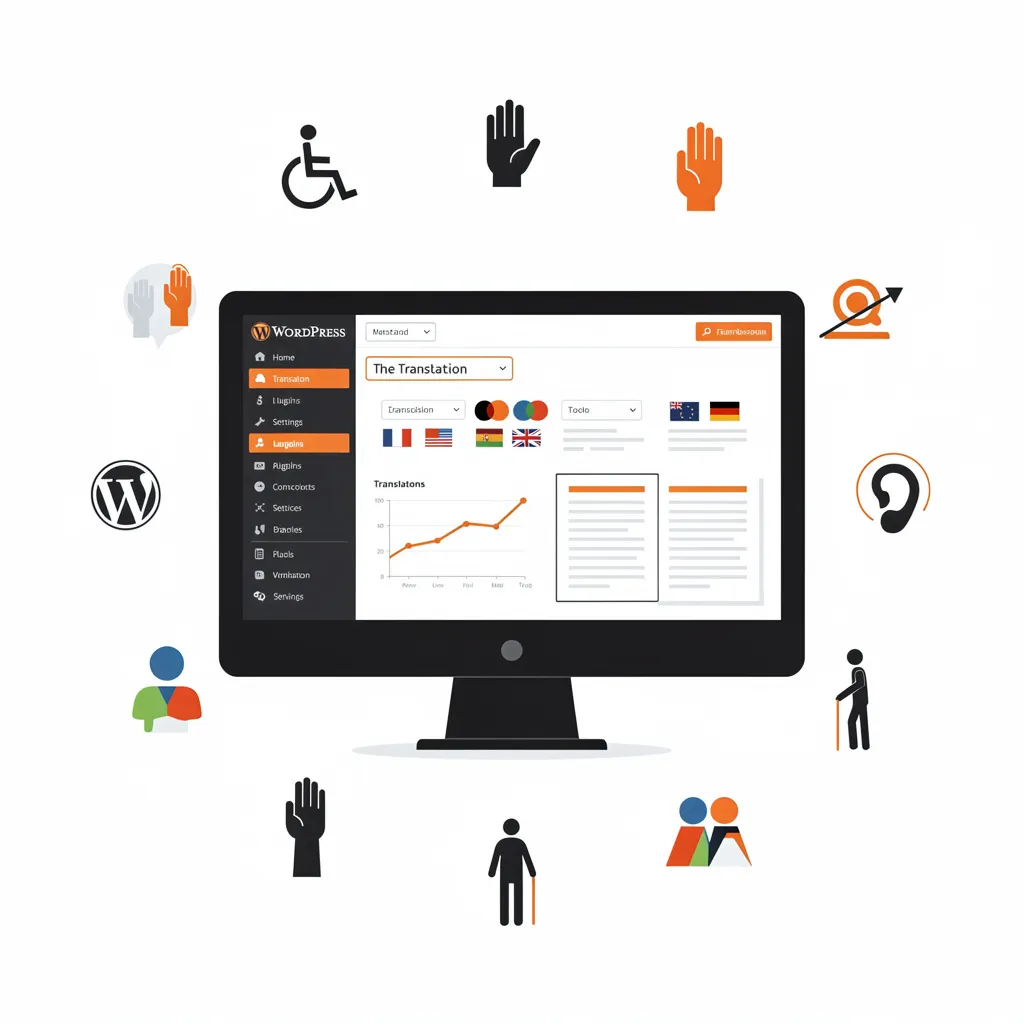
Organizations that have successfully implemented multilingual websites report measurable results that go straight to the bottom line. Data from organizations serving multilingual sites shows engagement and fundraising increases of at least 25%, with some websites experiencing improvements as high as 70%. For nonprofits operating on tight margins and competing for donor dollars, these performance gains represent the difference between merely surviving and truly thriving. Beyond the financial benefits, multilingual websites enable organizations to authentically serve diverse communities, recruit volunteers from underrepresented populations, and demonstrate genuine commitment to equity and inclusion.
The demographic reality of North American communities makes this transition urgent. Immigration patterns show that 81% of immigrants settle in metropolitan areas including Toronto, Vancouver, and Montreal in Canada, and similar urban centers across the United States. These communities often face language barriers when attempting to access nonprofit services, donate to causes they care about, or volunteer their time and expertise. When nonprofits remove these barriers through thoughtful multilingual website implementation, they unlock relationships with communities that have been waiting for organizations willing to meet them where they are.
WordPress as the Ideal Foundation for Multilingual Nonprofit Websites
Before diving into the technical details of creating multilingual sites, we need to acknowledge why WordPress has become the overwhelming platform of choice for nonprofit organizations. Currently, 58% of nonprofits use WordPress as their content management system, compared to only 7% using Wix, 6% using Squarespace, and 5% using Drupal. This dominance reflects WordPress’s unique combination of affordability, flexibility, and accessibility for organizations with limited technical resources.
What makes WordPress particularly well-suited for multilingual nonprofit websites is the mature ecosystem of translation plugins and tools that integrate seamlessly with the core platform. Organizations are not building custom solutions from scratch but rather leveraging proven tools that thousands of other nonprofits and businesses have successfully implemented. The WordPress community has extensive experience with multilingual implementation, providing resources, documentation, and support that make complex projects manageable even for nonprofits without dedicated IT staff.
Looking forward, WordPress usage in the nonprofit sector will continue expanding. The platform powers more than 43% of all websites globally, and the WordPress development roadmap for 2026 explicitly includes multilingual support as a core component of future development. The fourth phase of the Gutenberg project emphasizes multilingual capabilities, suggesting that native multilingual features may eventually become built into WordPress core rather than requiring third-party plugins. For nonprofits making technology decisions today, this roadmap provides confidence that investing in WordPress multilingual capabilities positions organizations well for the future.
Choosing Between Manual Translation and Automated Approaches
One of the first strategic decisions nonprofit leaders must make involves whether to use automated machine translation or invest in professional human translation. This decision carries significant implications for quality, authenticity, budget, and ongoing maintenance requirements.
Automated translation leverages tools like Google Translate to instantly generate translated versions of website content. The appeal is obvious: speed, low cost, and minimal ongoing effort once the system is configured. Modern neural translation technology has improved substantially over earlier approaches, producing translations that are generally comprehensible. For nonprofits with extremely limited budgets or those needing to provide basic access in numerous languages, automated translation represents a practical starting point.
However, automated translation comes with real limitations that nonprofit leaders should understand before committing to this approach. Machine translation frequently fails to capture nuance, cultural context, local idioms, and specialized terminology. For nonprofits serving communities with specific cultural contexts or communicating about technical program areas, machine-translated content often appears obviously automated to native speakers. Research shows that 40% of global consumers will not engage with content in languages other than their native language if that content appears machine-translated.
Professional human translation involves hiring native speakers or professional translators to create hand-crafted content for each language. This approach requires substantially more investment of time and financial resources but produces content that authentically resonates with each linguistic community. Native speakers can incorporate local references, adapt messages to cultural contexts, and ensure that subtle meanings are preserved. The difference between automated and professional translation becomes most apparent on critical pages like donation forms, mission statements, and volunteer recruitment messaging, where authentic voice drives conversion.
Many successful nonprofits adopt a hybrid approach that balances these considerations. Organizations begin with machine translation to achieve breadth of coverage across all website content, then invest in professional translation services to refine the most critical pages. This practical compromise allows nonprofits to provide functional multilingual content across their entire site while ensuring that mission-critical content reaches native speakers in authentic, professionally-crafted language. When budgets are limited, prioritizing professional translation for high-traffic, high-conversion pages like donation processing and volunteer sign-up delivers the greatest return on investment.
Selecting the Right Translation Plugin for Your Organization
The choice of translation plugin represents one of the most consequential technical decisions for multilingual WordPress sites. Two dominant options emerge in the nonprofit space: WPML and Polylang. Understanding the differences between these tools helps organizations make informed decisions that will serve their needs over multiple years.
WPML has established itself as the enterprise-standard solution for complex multilingual WordPress sites. The plugin enables organizations to create complete, separate versions of their site for each supported language, providing total control over translated content. WPML includes built-in integration with professional translation services, allowing organizations to connect with vetted translators directly through the plugin interface. The plugin supports multiple URL structures including subdomains, subdirectories, and separate domains, providing flexibility to match organizational preferences and SEO strategies. WPML automatically implements hreflang tags, which are critical for search engine optimization of multilingual content.
The primary limitation of WPML is cost. Pricing begins at approximately $43 USD per year for a single website with limited features and extends to approximately $218 USD per year for unlimited websites with full features. For nonprofits with multiple websites or requiring professional translation integrations, these costs add up. Additionally, WPML’s complexity is greater than some alternatives, requiring more learning curve for nonprofit staff managing translations.
Polylang represents a compelling alternative, particularly for budget-conscious nonprofits. The plugin includes a fully functional free version that supports unlimited languages and basic translation management functionality. For nonprofits with moderate translation needs and willing to invest in professional translation services separately, the free version may provide sufficient capability. The premium version of Polylang costs approximately $109 USD per year, though many organizations operate effectively using only the free version.
A significant technical consideration differentiating these plugins is performance impact. Polylang consistently performs faster than WPML in testing, with its lightweight design putting less strain on server resources and resulting in better PageSpeed scores. For nonprofit websites already struggling with limited hosting resources, this performance difference can be meaningful. Studies show that 25% of website visitors will abandon a site if it takes more than four seconds to load. For organizations attempting to reach donors across geographic regions with varying internet speeds, minimizing performance impact matters.
Our preferred and recommended solution is TranslatePress, a powerful and user-friendly translation plugin that works natively within the WordPress dashboard. Unlike cloud-based services, TranslatePress handles all translations locally, giving you complete control over your multilingual content. It features an intuitive front-end visual translation editor, making it easy to translate every part of your site—including plugin and theme content—without technical complexity. TranslatePress offers a free version for basic needs, while premium plans start at around $89 USD per year. With strong SEO support, integration with Google Translate or DeepL for automatic translations, and excellent performance, it’s an ideal choice for nonprofits and organizations focused on simplicity, flexibility, and speed.
For more comprehensive guidance on implementing translation workflows and best practices, our ultimate guide to WordPress translation covers everything from initial setup to ongoing maintenance strategies.
Building Effective Multilingual Site Architecture
Once a translation plugin has been selected, nonprofit organizations must determine how to structure their multilingual site architecture. This decision significantly impacts both user experience and search engine optimization. WordPress translation plugins support multiple URL structure options, each with distinct implications.
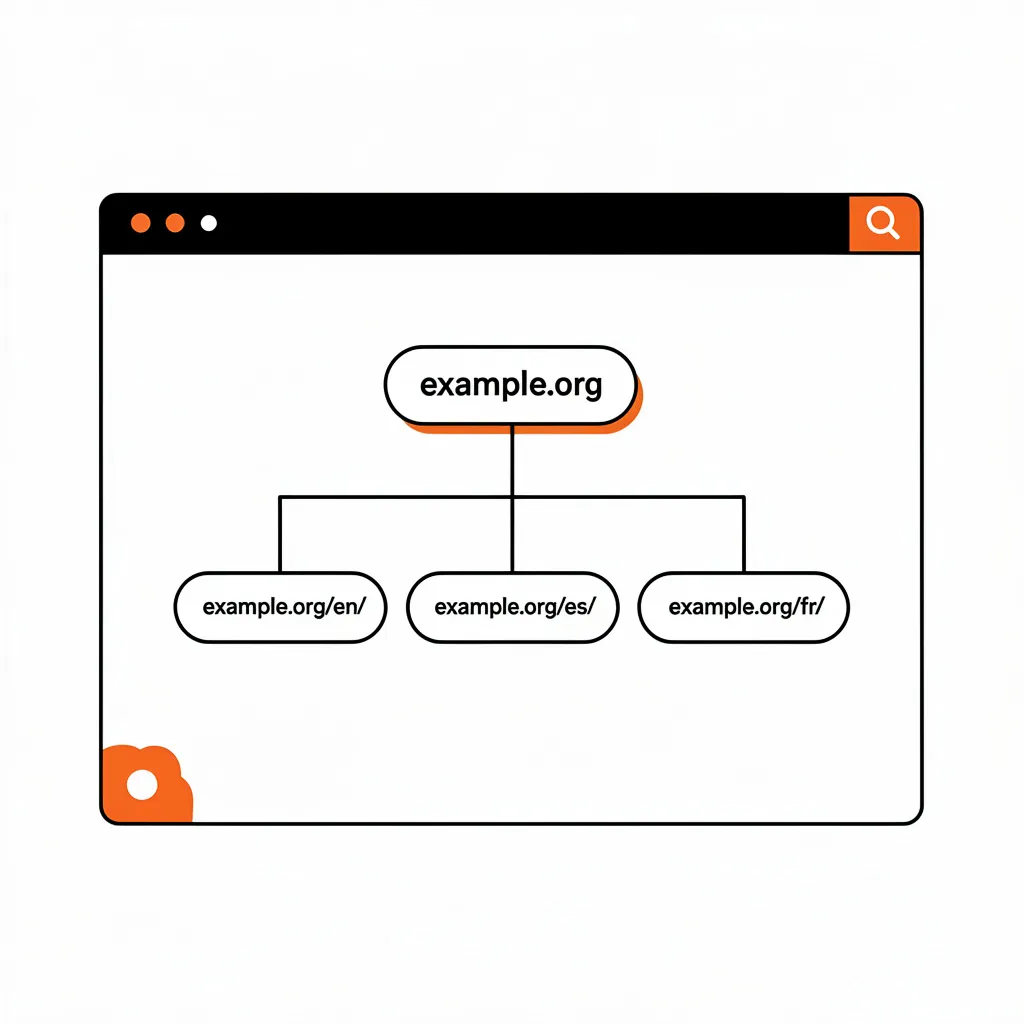
The subdirectory approach, using structures like example.org/en/ and example.org/es/, maintains all language versions on a single domain while organizing them into separate directories. This approach simplifies server configuration and certificate management since all languages share the same SSL certificate. Search engines treat subdirectories as part of the same site, allowing organizations to consolidate ranking authority. For nonprofits with limited technical resources, subdirectories offer the simplest implementation approach.
The subdomain approach uses structures like en.example.org and es.example.org, separating languages into distinct subdomains while maintaining a single primary domain. This approach can simplify some backend configurations and allows for easier per-language performance optimization through separate caching strategies. However, search engines may treat subdomains as separate sites, potentially reducing domain authority consolidation benefits.
The separate domain approach uses entirely distinct domains for each language, such as example.org for English and ejemplo.org for Spanish. This represents the most complex approach but can offer advantages for organizations with very large multilingual communities or specific regional markets. However, most nonprofit organizations find this approach unnecessarily complex and costly.
Most WordPress experts and nonprofit web development agencies recommend the subdirectory approach for nonprofits beginning multilingual expansion. This approach balances simplicity of implementation with strong SEO characteristics and allows organizations to build on domain authority across languages.
Optimizing Multilingual Sites for Search Engines
Implementing effective search engine optimization for multilingual content represents a critical but often overlooked aspect of multilingual website strategy. Inadequate multilingual SEO can result in translated content being invisible to search engines, defeating the primary purpose of multilingual expansion.
The foundation of multilingual SEO is proper implementation of hreflang tags. These HTML attributes indicate to search engines the relationship between different language versions of the same content. For example, an English page should include hreflang tags indicating the existence of Spanish, French, and other language versions, while the Spanish version should indicate the English and other language alternatives. Search engines use this information to ensure that users searching in Spanish are directed to Spanish content, while English-language users see English versions.
Critical best practices for hreflang implementation include ensuring that tags are implemented on all pages with language variants, not just the homepage. Organizations must use correct ISO 639-1 language codes such as “es” for Spanish and “fr” for French, and ISO 3166-1 region codes like “CA” for Canada when specifying language and region combinations. The hreflang attribute x-default should specify fallback pages for users with language preferences the organization does not yet support. Regular auditing of hreflang tags is essential, as broken implementations can actually harm search engine visibility by confusing algorithms about which content is authoritative.
Beyond hreflang implementation, multilingual SEO requires attention to keyword optimization in each language. Organizations cannot simply translate keywords but must conduct native keyword research in each target language to identify the search terms that speakers of that language actually use. Many search terms have no direct translations. Spanish-language searches may include terms that differ significantly from literal translations of English search terms. Professional SEO specialists recommend conducting separate keyword research for each language and optimizing page titles, meta descriptions, and content for language-specific search terms.
The implementation of language-specific sitemaps improves search engine crawlability of multilingual sites. Many WordPress translation plugins automatically generate proper multilingual sitemaps, but organizations should verify that sitemaps include all language variants and that search engines are properly configured to crawl all language versions. Google Search Console provides tools to monitor how search engines are indexing multilingual content.
Integrating Accessibility with Multilingual Functionality
Creating multilingual nonprofit websites requires attention not only to language translation but also to digital accessibility for users with disabilities. This integration of multilingual and accessibility considerations is especially important given that many nonprofit organizations serve populations with higher rates of disability, and accessibility requirements apply to nonprofit websites regardless of multilingual status.
The legal landscape for nonprofit website accessibility in North America establishes clear requirements. In the United States, the Americans with Disabilities Act applies to nonprofits with 15 or more employees and any organization providing services to the public, with courts increasingly interpreting digital content as part of covered services. In Canada, the Accessibility for Canadians with Disabilities Act and provincial legislation including the Accessibility for Ontarians with Disabilities Act establish accessibility requirements for many organizations.
The Web Content Accessibility Guidelines (WCAG) provide the technical standard for digital accessibility in both countries. WCAG defines three conformance levels A, AA, and AAA with most nonprofits needing to target WCAG 2.1 Level AA as a reasonable goal. This level addresses the most common user barriers and represents the standard most frequently required in legal contexts. Our comprehensive nonprofit web accessibility guide covers these requirements in detail and provides practical implementation strategies.
Multilingual websites present unique accessibility considerations. Many accessibility plugins specifically support multilingual sites. These plugins should handle accessibility features consistently across all language versions of the site, ensuring that users can access content in their preferred language and with appropriate accessibility accommodations. Critical accessibility features for nonprofit websites include descriptive alt text for images that functions properly across all language versions, keyboard navigation that works consistently in all languages, adequate color contrast meeting WCAG requirements, scalable text that works properly in different languages (some languages require more space than English for the same content), and accessible online forms with proper label implementation.
For multilingual sites specifically, video captions and audio descriptions should be available in all supported languages, not just English. The integration of accessibility and multilingual functionality requires careful attention to plugin interactions. Organizations should test that page builders, accessibility plugins, and translation plugins work together without conflicts. Performance is also important, as accessibility plugins combined with translation plugins can sometimes impact page load speed. Careful selection and configuration can minimize this effect.
Managing Content Strategy Across Multiple Languages
While technical implementation is important, the strategic approach to content creation and management determines whether multilingual websites succeed in practice. Many nonprofit organizations struggle because they treat multilingual websites as simple translations of English content rather than as distinct communicative efforts tailored to each linguistic community.
The foundational principle of effective multilingual nonprofit content is that translation goes far beyond linguistic conversion. Localization, the process of adapting content to resonate culturally with specific audiences should inform content strategy for multilingual sites. This means that while the core message and mission remain consistent, the specific examples, imagery, cultural references, and communication style may need adjustment for different communities. A nonprofit addressing environmental conservation, for example, might emphasize different environmental challenges, solutions, and success stories relevant to Spanish-speaking versus French-speaking communities.
Imagery represents a critical consideration often overlooked in multilingual website projects. Website imagery should reflect the communities being served and avoid stereotypes or culturally inappropriate symbolism. Colors, gestures, and symbols carry different meanings across cultures, and what is considered positive in one cultural context may be offensive in another. Nonprofit websites serving diverse communities should intentionally select imagery that represents the communities being served and avoids cultural appropriation or insensitivity.
Practical recommendations for multilingual content management include establishing clear workflow processes that integrate translation into the content creation process rather than treating translation as an afterthought. Many nonprofit organizations create content in English, publish it on their website, and only then arrange for translation. A more efficient approach involves planning for multilingual content from the initial conception phase. Content calendars should identify content requiring translation, with translation timelines built into the overall publication schedule.
For nonprofits with limited translation budgets, implementing content prioritization ensures that the most important and frequently visited content receives professional translation while less critical content may use automated translation or remain in English. Website analytics reveal which pages receive the most traffic and engagement, allowing organizations to strategically allocate limited translation resources to content that reaches the largest audience.
Processing Donations Across Languages and Borders
Nonprofits exist fundamentally to serve communities and process donations, making payment functionality on multilingual websites critically important. Many North American nonprofits serve diaspora communities or support international work, requiring the ability to accept donations from supporters speaking various languages and located in different countries.
Modern donation platforms increasingly support multilingual interfaces and multi-currency processing. Leading donation software platforms now support multi-language donation forms where the appropriate language is automatically displayed based on donor browser settings. Additionally, platforms supporting 60 or more digital currencies enable donors worldwide to contribute in their preferred currency, with automatic currency conversion facilitating both donor convenience and organizational financial management.
However, ensuring that donation processes function smoothly across multiple languages requires attention to several technical and operational considerations. Currency conversion must be handled transparently so donors understand exactly how much they are contributing in both their local currency and the organization’s operating currency. Some payment gateways operate differently in different geographic regions or currencies, requiring careful routing configuration. Payment methods standard in Germany or Israel may differ from those available in the United States, requiring organizations to support multiple payment processing pathways.
A critical operational consideration involves gift acceptance policies for international donations. Some nonprofits limit the geographic regions from which they accept donations due to regulatory compliance requirements, tax implications, or mission focus. Multilingual websites should clearly communicate any geographic restrictions on donations. Organizations accepting international donations should develop clear, publicly available gift-acceptance policies that explain what the organization accepts, how assets are valued, any fees or liquidation steps, and how cross-border compliance is handled.
Transparency regarding how funds are used is particularly important for international donors. Research shows that 66% of consumers would switch brands if they felt the brand disrespected their culture or social responsibility beliefs, suggesting that donors from other countries are equally sensitive to perceptions about how their donations are used. International donors often want verification that their contributions are supporting programs in specific geographic regions or addressing particular issues. Providing multilingual impact reporting and transparency regarding how funds are deployed helps build trust with international donor communities.
Ensuring Performance and Speed on Multilingual Sites
The addition of multilingual functionality inherently adds complexity and processing requirements to WordPress sites, with potential negative impacts on performance if not carefully managed. Given that 25% of website visitors will abandon a site that takes more than four seconds to load, and that nonprofits already average bounce rates of 60-70%, performance optimization is essential.
Core Web Vitals represent Google’s formal measurement of website performance. Largest Contentful Paint measures how long it takes for main content to become visible, with 2.5 seconds as a good target. Cumulative Layout Shift measures visual stability as pages load, with 0.1 or below considered good. Interaction to Next Paint measures how responsive pages are to user interaction, with 200 milliseconds or below as good performance.
Multilingual implementations can negatively impact all three Core Web Vitals if not carefully optimized. Each additional language version requires additional server processing and may require additional database queries, potentially increasing Time to First Byte. Image assets may be served in multiple formats optimized for different languages, potentially increasing bandwidth requirements. Translation plugins that process content on-the-fly add processing overhead compared to static content.
Practical optimization strategies for multilingual sites include implementing page caching, which stores rendered page content and serves static copies rather than regenerating pages with each request. Performance-optimized WordPress hosting providers often implement caching automatically, but nonprofit organizations using shared hosting should evaluate caching plugins to improve performance. Content Delivery Networks cache and serve content from geographic locations distributed globally, dramatically improving load times for visitors geographically distant from the primary server. This is particularly important for nonprofits serving international audiences.
Image optimization significantly impacts performance, particularly on multilingual sites that often include numerous images representing different communities. Reducing image file sizes without compromising quality using appropriate formats and compression techniques can substantially improve load times. Organizations should implement lazy loading, which defers loading images until they are visible in the viewport, reducing initial page load time.
For more technical insights on optimizing WordPress performance and integrating various systems, our guide on WordPress API integrations provides detailed strategies for maintaining speed while adding functionality.
Security, Maintenance, and Ongoing Management
Operating a nonprofit website requires attention to security, maintenance, and regulatory compliance. These requirements become more complex on multilingual sites due to the increased number of plugins and potential geographic compliance considerations. The stakes are high: 96% of WordPress vulnerabilities stem from third-party plugins rather than WordPress core itself, meaning that plugin management is critical. Additionally, 27% of nonprofits worldwide have experienced cyberattacks, demonstrating that security threats are real concerns.
Regular software updates represent the first line of defense against security vulnerabilities. WordPress core updates, theme updates, and plugin updates should be applied promptly when released. For nonprofits with limited technical capacity, managed WordPress hosting providers can often handle updates automatically, or maintenance agreements with WordPress agencies can ensure updates occur on schedule. Verification that all components of multilingual WordPress sites including translation plugins, donation plugins, form builders, and accessibility plugins, are properly updated is essential.
Strong authentication practices protect against unauthorized access to nonprofit website administrative areas. Two-factor authentication should be enabled for all administrator accounts, requiring not just a password but an additional verification factor such as a code from an authenticator application. This substantially increases the difficulty of account compromise through password-based attacks.
Security monitoring plugins actively monitor for threats, malware, and suspicious patterns. These plugins maintain databases of known malware signatures and can alert nonprofit organizations to potential security issues. Web Application Firewalls examine incoming traffic and block requests that appear to be attacking the website, providing an additional defensive layer.
Data privacy and compliance requirements affect nonprofit websites, particularly those handling donor information or personal beneficiary data. The General Data Protection Regulation applies to any nonprofit accepting donations or engaging supporters from European countries, regardless of where the nonprofit operates. While Canada and the United States have less comprehensive privacy legislation than GDPR, the Personal Information Protection and Electronic Documents Act in Canada and various state-level privacy laws in the United States establish requirements for handling personal information.
Backup strategies protect against data loss through hardware failure, hacking, or accidental deletion. Daily automated backups stored in geographically separate locations from the primary server ensure that organizations can recover from disaster. Many managed WordPress hosting providers include backup functionality, but nonprofits should verify backup frequency and retention policies.
Planning Budgets and Resources for Multilingual Implementation
The financial reality of implementing and maintaining multilingual nonprofit websites determines feasibility for many organizations. While multilingual functionality is increasingly accessible, understanding the various cost components enables realistic budgeting and strategic decision-making.
The initial development cost for creating a multilingual WordPress site depends on whether the organization is building a new site or converting an existing site. For new builds, multilingual functionality is often integrated into the initial design process and adds moderately to development costs. For organizations converting existing sites, the cost depends on whether the process is primarily technical or involves substantial content restructuring. Basic multilingual conversions might cost $3,000-$5,000 USD, while comprehensive redesigns with multilingual functionality could extend to $15,000-$50,000 USD depending on site complexity and scope.
Translation costs represent a substantial ongoing component for nonprofits committed to professional translation. Professional human translation typically costs $0.15-$0.35 USD per word, meaning that translating a site with 20,000 words into two additional languages could cost $6,000-$14,000 USD for the initial translation, with additional costs for updating translations as content changes. Some nonprofits find it practical to engage professional translation only for critical pages while using automated translation for other content, reducing costs substantially while maintaining quality for mission-critical pages.
Plugin costs vary depending on tools selected. WPML ranges from approximately $43-$218 USD per year depending on features. Polylang ranges from free to approximately $109 USD per year. Other translation plugins offer various pricing models. Donation, form building, events management, and automation plugins add additional annual costs. For nonprofits evaluating comprehensive platforms, total annual plugin costs might range from $500-$3,000 USD depending on functionality selected.
Hosting costs should be evaluated considering multilingual requirements. Multilingual sites often benefit from managed WordPress hosting or performance-optimized hosting rather than basic shared hosting, as the added complexity and potential traffic from multilingual reach justifies the investment in better server performance. Performance-optimized hosting might cost $50-$200 USD monthly compared to $5-$20 USD monthly for basic shared hosting.
Maintenance and support represent ongoing cost considerations. Website maintenance for nonprofits typically costs between $300-$1,000 per year for basic support including updates and security, $1,000-$5,000 per year for mid-level support with regular monitoring and optimization, and $5,000-$12,000 or more annually for advanced support with full site management. Multilingual sites often require mid-level or advanced support due to increased complexity.
The financial equation becomes clearer when evaluated against the benefits achieved. Organizations reporting 25-70% increases in engagement and fundraising after implementing multilingual capabilities may find that the investment provides rapid return through increased donations and volunteer engagement. However, organizations with very limited budgets may find phased implementation more practical, beginning with translation of the most critical pages and expanding multilingual functionality over time as budgets permit.
Future Trends Shaping Multilingual Nonprofit Websites
The landscape of multilingual nonprofit websites continues to evolve rapidly, with several significant trends likely to shape how organizations approach international digital engagement in 2026 and beyond. Understanding these trends enables nonprofit digital strategists to make technology decisions that will remain relevant as the field develops.
Artificial intelligence is increasingly integrated into multilingual website functionality. Beyond simple automated translation, AI capabilities now include donor segmentation, personalized outreach customization, and intelligent chatbots that respond to supporter inquiries in multiple languages. These AI capabilities promise to help nonprofits with limited staff serve larger and more diverse supporter bases effectively. However, AI-powered systems raise new considerations around bias, accuracy, and oversight that nonprofit leaders should understand before implementation.
WordPress core multilingual support is emerging as a priority in the development roadmap. The fourth phase of the Gutenberg project explicitly includes multilingual support as a primary focus for 2026. If this transition succeeds, native multilingual capabilities built into WordPress core could eventually reduce dependence on third-party translation plugins while improving performance. This development would particularly benefit nonprofits by reducing the number of plugins requiring active maintenance and oversight. Our analysis of WordPress trends for 2025 and beyond explores how these changes will impact small and medium organizations.
Mobile-first optimization is increasingly central to multilingual strategies, recognizing that 53% of nonprofit website traffic now comes from mobile devices. Multilingual sites must ensure that language switching functions properly on mobile devices, that translated content displays correctly on various screen sizes, and that mobile-specific features like click-to-call and one-tap messaging work in all supported languages.
Integration with modern fundraising technologies including cryptocurrency donations, employer gift matching, and stock donations is expanding. Nonprofits serving international audiences will increasingly need multilingual interfaces for accepting diverse payment methods and understanding different giving cultures across communities. Platforms now supporting 60+ digital currencies are enabling nonprofits to accept cryptocurrency donations alongside traditional methods.
Avoiding Common Implementation Pitfalls
As organizations implement multilingual WordPress websites, several common challenges emerge that merit direct attention. Awareness of these challenges enables organizations to proactively address issues rather than discovering them through operational problems.
One persistent challenge involves underestimating the ongoing effort required for translation maintenance. Organizations frequently implement multilingual sites with translated content, then discover that updating the translation requires continuing effort as content is modified or added. Unlike website design, which is completed and then remains stable, translation is an ongoing operational responsibility. Websites that fail to maintain translation quality over time where English updates months ahead of translations in other languages create frustration for multilingual users and undermine organizational credibility.
Another common challenge involves inadequate cultural adaptation of content. Organizations sometimes assume that direct translation is sufficient, not recognizing that cultural context, local references, appropriate imagery, and communication style often require adaptation beyond translation. Content that appears authentic and compelling in English may appear foreign or insensitive to communities of other languages. Investing in localization rather than simple translation produces significantly better results.
Technical complexity can overwhelm nonprofits with limited IT capacity. Selection of incompatible plugins, inadequate hosting for multilingual requirements, or overly complex implementation approaches can create technical situations that organizations cannot manage effectively. Engaging experienced WordPress agencies for implementation and training helps nonprofits avoid technical pitfalls. Additionally, selection of well-integrated, supported plugins reduces technical complexity compared to using various point solutions that may not work together effectively.
Performance degradation is a common unintended consequence of poorly implemented multilingual sites. When translation plugins, accessibility plugins, multiple form-building plugins, and various other tools combine without performance optimization, websites can become significantly slower. Organizations should prioritize performance optimization from the beginning of multilingual implementation rather than attempting to optimize after performance problems emerge.
Incomplete accessibility implementation represents another pitfall. Organizations implementing multilingual functionality sometimes overlook ensuring that accessibility features function properly in all languages. Screen readers need to work correctly with translated content. Forms need accessible labels in all languages. Video captions need to be available in all supported languages. Accessibility should not be an afterthought in multilingual implementation but rather an integral component of the project.
Taking the First Steps Toward Multilingual Expansion
For nonprofit organizations ready to begin multilingual expansion, a clear implementation framework guides successful execution. The foundation begins with strategic clarity about why the organization is implementing multilingual functionality, which communities it intends to reach, and what outcomes it aims to achieve. Different strategic objectives may lead to different technology choices and implementation approaches. Organizations should avoid implementing multilingual functionality as a generic best practice without clear strategic purpose.
A diagnostic assessment of current website performance and audience baseline establishes metrics against which future multilingual performance can be measured. Organizations should understand current traffic by geographic region, language preferences indicated through website analytics, bounce rates, conversion rates for key actions, and donor engagement patterns. Post-implementation, these baseline metrics enable evaluation of whether multilingual expansion achieved intended objectives.
Technology planning involves evaluating translation plugins, hosting infrastructure, and complementary tools against organizational needs, budget, and technical capacity. Organizations should conduct careful evaluation of multiple plugin options rather than assuming that the most widely recommended tool is optimal for their specific circumstances. Performance requirements, budget constraints, technical support capacity, and feature needs all influence the optimal choice among available options.
Content strategy planning addresses which content requires translation, translation approach, and workflow for maintaining translation quality over time. Organizations should identify core content that must be professionally translated to maintain authenticity and quality, content suitable for professional translation on a rolling basis, and content that may be served in automated translation for breadth and speed. Workflow documentation ensures that translation occurs consistently as new content is created rather than occurring as a separate afterthought project.
Implementation with comprehensive testing verifies that all functionality operates correctly in all supported languages. Organizations should verify that donation forms process correctly, volunteer sign-ups capture information properly, email notifications and automated communications function across languages, accessibility features work consistently, and performance remains within acceptable parameters. Real-world testing with native speakers of target languages reveals usability issues that automated testing cannot identify.
Ongoing maintenance and updates establish schedules for updating plugins, monitoring performance, auditing translations for accuracy, and ensuring compliance with evolving security and accessibility standards. Multilingual sites require more active management than single-language sites, and organizations should budget resources appropriately.
Community engagement involves communicating about multilingual availability to target communities through appropriate channels, celebrating expanded accessibility, and gathering feedback from multilingual users about how to continuously improve the experience. Organizations should actively market their multilingual capabilities rather than expecting that communities will discover translations passively.
The demographic reality of North American communities, combined with the mature state of WordPress multilingual tools and the proven results organizations achieve through multilingual expansion, creates a compelling case for action. Organizations that successfully implement authentic, well-maintained multilingual websites will expand their reach, deepen community connections, increase fundraising effectiveness, and better serve increasingly diverse populations. Those that delay multilingual expansion will gradually find themselves disadvantaged in competition for donors, volunteers, and community trust as expectations for accessible, inclusive digital presence increase. The time to act is now, and WordPress provides the platform upon which that multilingual future is built.
Frequently Asked Questions
Why do so many nonprofits still have English-only websites despite serving diverse communities?
You’re spot on: it’s frustrating when a nonprofit’s mission to help immigrants gets blocked by language barriers on their own site. Only 20% of nonprofits offer websites in more than one language, even though over 20% of the US population speaks English as a second language, and Canada’s diversity (like French and immigrant languages) makes it worse. This gap excludes families blocks away, but fixing it with WordPress multilingual tools can boost engagement by 25-70%, turning exclusion into real connections.
WPML vs. Polylang which translation plugin is best for budget-strapped nonprofits?
Picking the right plugin feels overwhelming with tight budgets, right? WPML shines for complex sites with pro translation integrations and SEO hreflang tags, but costs $43-$218/year and has a steeper learning curve. Polylang is lighter, faster (better PageSpeed scores), with a free version for basics and premium at $109/year, ideal if you’re handling translations separately. Start with Polylang free for most needs; both beat custom builds since 58% of nonprofits already use WordPress.
Should nonprofits use machine translation or hire human translators for their sites?
Automated tools like Google Translate are quick and cheap for broad coverage, but they miss cultural nuances, 40% of users skip obviously machine-translated content, hurting trust on donation or mission pages. Go hybrid: machine for everything, pro human translation ($0.15-$0.35/word) for high-stakes pages like volunteer sign-ups. This balances budgets (e.g., $6K-$14K initial for 20K words into two languages) while making your site feel authentic to Spanish, Arabic, or Mandarin speakers.
How can nonprofits make multilingual sites load fast without losing SEO?
Slow sites kill conversions, 25% of visitors bounce after 4 seconds, and nonprofits average 60-70% bounce rates. Use subdirectory URLs (e.g., example.org/es/) for easy SEO and shared domain authority, auto hreflang tags from plugins, and caching/CDNs. Optimize images with lazy loading, pick lightweight plugins like Polylang or Weglot ($150/year), and aim for Core Web Vitals like 2.5s Largest Contentful Paint. Managed hosting ($50-$200/month) handles the extra load from translations seamlessly.
What’s the real cost and ROI of going multilingual on WordPress?
Budget worries are real for nonprofits: expect $3K-$50K initial setup (cheaper for conversions), plus plugins ($500-$3K/year), translations, and maintenance ($300-$12K/year). But the payoff? 25-70% jumps in fundraising and engagement, especially with 81% of immigrants in cities like Toronto or NYC. Phase it: translate key pages first, track analytics, and watch donations grow as you authentically reach underserved communities without breaking the bank.