Master Local SEO for Service Businesses

If you’re a plumber, electrician, cleaner, landscaper, or other service-area business, local SEO is not “generic SEO with a city name.” Google treats service-area and hybrid businesses differently especially inside your Business Profile settings and that’s where most small businesses quietly lose rankings and leads.
We’ve spent years building WordPress websites for service-area businesses across Canada, and we’ve watched too many honest operators struggle to appear in local searches despite running great companies. The problem isn’t your reputation or skills: it’s that service-area businesses face unique ranking barriers that traditional brick-and-mortar businesses never encounter.
This blueprint walks you through exactly how to overcome those barriers, step by step, using your WordPress website and Google Business Profile working together.
Table of Content
What Google Means by “Service-Area” and “Hybrid” Businesses
Google categorizes businesses into three fundamental types, and getting this classification correct matters more than most service business owners realize. The first category includes storefront businesses like retail shops, restaurants, or offices where customers visit a fixed physical location. The second category covers pure service-area businesses that travel to customers without maintaining any public-facing office. The third category describes hybrid businesses that operate both models—they maintain a physical office where customers can visit and also travel to provide services at customer locations.

Service-area businesses face an immediate disadvantage because Google requires them to hide their street address from their Business Profile. This compliance requirement exists to prevent customer confusion—Google doesn’t want people showing up at your home office or warehouse looking for service. The consequence of address hiding creates ranking friction because Google’s local algorithm traditionally relies heavily on physical proximity between the searcher’s location and the business address. When you hide your address, you remove one of the strongest ranking signals available, requiring you to compensate through stronger performance in other ranking factors including reviews, content depth, citation consistency, and website authority.
When to Hide Your Address (and Why It Matters)
The decision about whether to display or hide your business address follows clear guidelines from Google, though enforcement varies and confusion persists throughout the service-business community. If customers never visit your business location for appointments, consultations, or purchases, you must hide your address according to Google’s Business Profile guidelines. This requirement applies to most residential service providers including plumbers, electricians, HVAC contractors, cleaners, landscapers, and mobile repair services. If you operate a hybrid model where some customers visit your office location while others receive on-site service, you can display your address and designate service areas separately.
The strategic implications extend beyond simple compliance. Many service businesses incorrectly believe they can circumvent the address-hiding requirement by listing a suite number, using a coworking space address, or registering a virtual office. Google actively detects and penalizes these strategies through manual review processes and automated systems that cross-reference addresses against known virtual office providers. Businesses caught violating address guidelines face suspension of their entire Business Profile, instantly eliminating all local search visibility until the violation gets corrected and the suspension lifted through Google’s appeal process.
We guide clients through this decision methodically by examining their actual business operations. Do customers ever visit your physical location during normal business operations? If the answer includes even occasional customer visits for estimates, consultations, or payment processing, you qualify as a hybrid business and can display your address. If customers exclusively receive service at their locations and never visit yours, you must hide your address and designate service areas instead. This foundational classification decision affects every subsequent local SEO strategy element because it determines how Google evaluates your business legitimacy within different geographic markets.
Google Business Profile Setup That Service-Area Businesses Get Wrong
The majority of service-area businesses we audit have fundamental Google Business Profile configuration errors undermining their local search performance. These mistakes don’t stem from lack of effort—most business owners genuinely tried to set up their profiles correctly—but from misunderstanding the specific requirements that apply to service-area businesses versus location-based businesses. The cumulative effect of multiple small configuration errors creates significant competitive disadvantages that persist until someone conducts a systematic audit and correction process.
Profile completeness represents the foundation of effective Google Business Profile optimization. Research demonstrates that businesses with complete profiles attract seventy percent more location visits from customers than businesses with incomplete information. Completeness means filling every available field including business name, primary and secondary categories, services offered, business description, phone number, website URL, hours of operation, appointment URL if applicable, and comprehensive photography showing your work, team, vehicles, and service areas. We’ve found that most service businesses complete only sixty to seventy percent of available fields, leaving substantial opportunity for competitors who invest time in complete optimization.
Service Areas (Limits, Updates, Approvals)
Google allows service-area businesses to specify up to twenty service areas within their Business Profile, with each area representing a city, neighborhood, or postal code where the business actively provides services. The service area selection directly determines which geographic searches will trigger your Business Profile appearance, making this one of the highest-impact configuration decisions available. Many service businesses make critical errors in how they approach service area designation, either claiming too few areas and limiting their visibility, or claiming too many areas without sufficient supporting evidence and triggering Google’s spam detection systems.
Strategic service area selection requires balancing legitimate operational reach against competitive positioning and supporting evidence. We recommend that clients initially claim service areas where they’ve already completed work for multiple customers, accumulated reviews mentioning those locations, and can demonstrate ongoing operational presence. This conservative approach builds credibility with Google’s review systems, reducing the likelihood of service area rejections or profile suspensions. Once you’ve established initial service areas and built supporting evidence through customer reviews and location-specific website content, you can gradually expand into adjacent markets where you’re developing business presence.
Service area updates should occur methodically rather than through bulk additions or removals that might trigger manual review. When expanding into new service areas, add one to three areas at a time, wait for approval, then build supporting evidence through customer acquisition, review generation, and website content before adding additional areas. When you need to discontinue serving certain areas, remove them cleanly rather than leaving outdated service areas that create customer confusion and potential negative reviews from customers you can’t actually serve promptly.
Categories, Services, and “Relevance” Signals
Google Business Profile categories function as primary classification signals telling Google which searches should trigger your business appearance. The primary category selection carries the most weight, with secondary categories providing additional context about service offerings without the ranking power of the primary category. Service-area businesses frequently select overly broad primary categories hoping to appear in more searches, but this strategy typically backfires because Google rewards businesses whose primary category precisely matches search intent over businesses with generic category classifications.
We help clients select primary categories that accurately reflect their highest-value service offering rather than trying to encompass their entire service portfolio in a single category designation. An HVAC contractor might select “HVAC Contractor” as primary category rather than the broader “Contractor” category. An electrician should select “Electrician” rather than “Home Improvement” or “Handyman.” This precision in category selection improves your relevance signals for the most important searches driving your business, even if it means you appear less frequently for tangential searches that rarely convert anyway.
The services section within your Google Business Profile allows detailed specification of individual service offerings with optional pricing information. Most service businesses either skip this section entirely or list only three to five services, missing the opportunity to claim visibility for specific service variations that potential customers search. We recommend listing every distinct service you offer as a separate line item, using the specific terminology that customers use when searching rather than industry jargon. This granular service listing creates additional keyword associations between your business and specific search terms, improving your relevance scoring for long-tail searches that often indicate high purchase intent.
Service-Area Pages on Your WordPress Site
Your WordPress website must actively compensate for the visibility disadvantages inherent in service-area business operations by building location-specific content that demonstrates genuine operating presence within each market you serve. Service-area pages represent the cornerstone of this content strategy, creating dedicated landing pages optimized for searches combining your services with specific geographic locations. These pages serve multiple purposes simultaneously—they provide targeted landing pages for location-specific searches, they demonstrate to Google that you genuinely serve specific communities, they offer platforms for accumulating location-specific reviews and testimonials, and they create internal linking hubs connecting your core service descriptions to geographic markets.
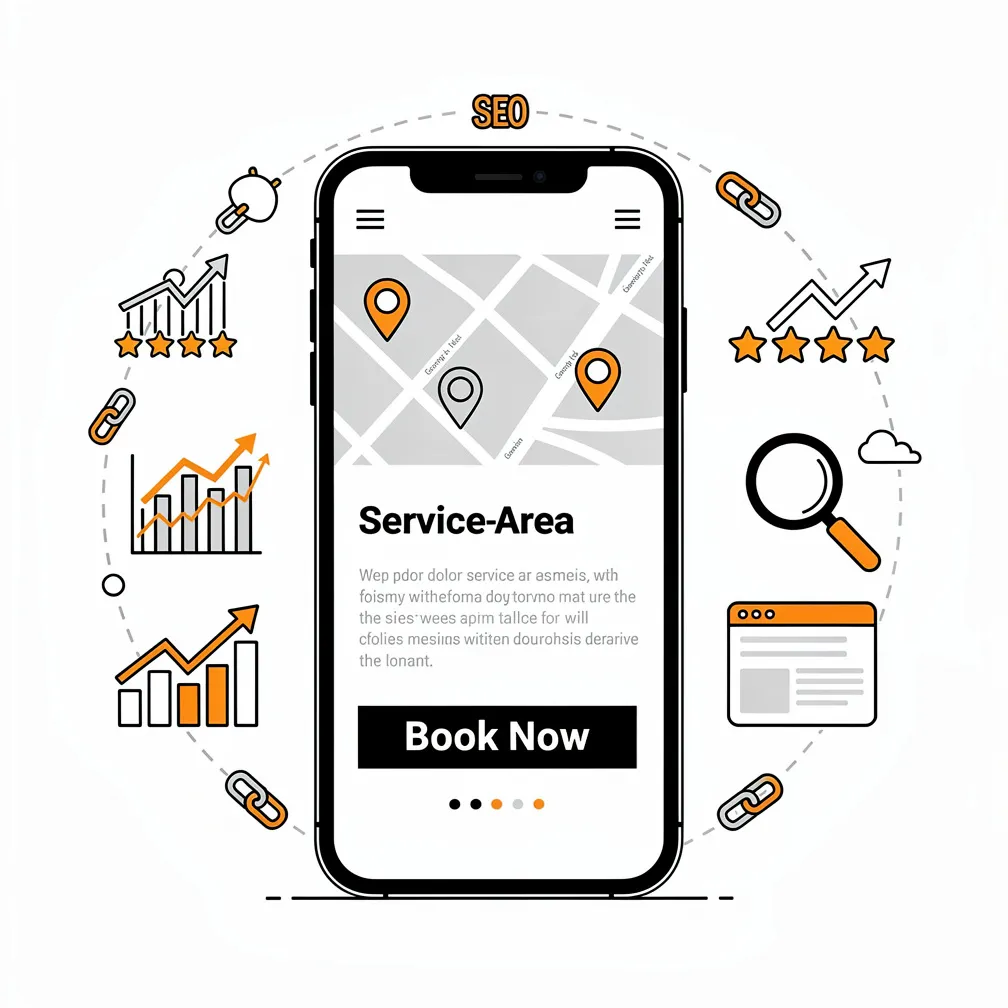
We approach service-area page architecture as a hierarchical structure where your homepage establishes overall brand authority, service category pages describe major service lines, and location pages connect those services to specific communities. This structure allows search engines to understand the relationships between different content elements while providing users with clear pathways to find information relevant to their specific needs. The internal linking between these page types reinforces topical authority while distributing page authority throughout your site structure.
City/Service Page Strategy Without Duplicate Content
The duplicate content challenge represents the primary technical obstacle in service-area page development. When you serve fifteen cities with five core services, the mathematical combination creates seventy-five potential location-service pages. Creating genuinely unique content for seventy-five pages requires substantial investment, and many businesses resort to templates where they swap city names into otherwise identical content. Google recognizes this pattern and either excludes the duplicate pages from search results or applies ranking penalties to the entire site for thin content violations.
We solve this challenge through strategic content differentiation combined with smart site architecture. Rather than creating pages for every city-service combination, we initially focus on your highest-opportunity markets—cities where you’ve completed the most work, accumulated the most reviews, and face the most favorable competitive dynamics. For each priority city, we develop a main location page describing your overall business presence in that market, then create service-specific pages only where distinct local factors warrant unique content. For example, a roofing contractor might create unique content for cities with specific building code requirements, distinct weather challenges, or particular architectural styles common in the area, while consolidating service descriptions for similar nearby communities.
Content differentiation strategies that avoid duplicate content penalties include discussing local building codes and permit requirements specific to each municipality, describing climate and weather factors affecting service delivery or equipment specifications in the area, highlighting completed projects in the community with before-after photography and specific challenge descriptions, featuring testimonials from customers in that specific location, and addressing local landmarks, neighborhoods, or community characteristics that demonstrate genuine local knowledge. This approach creates substantially more work than template-based content development, but it produces pages that rank competitively and survive algorithm updates targeting thin content.
Page Elements: Map Embed, Proof, Localized FAQs, Calls-to-Action
Each location page should incorporate specific elements that collectively demonstrate local authority while serving user needs and search engine ranking factors. An embedded Google Map showing the service area provides visual confirmation of your geographic coverage while potentially passing location signals to search algorithms when the map centers on the target community. We typically embed maps using the Google Maps embed code rather than screenshots, ensuring that the map remains current and functional for users who want to interact with it.
Social proof elements specific to the location build trust and conversion rates while providing SEO value through location mentions and fresh content. Customer testimonials from residents or businesses in the target city, ideally including specific street names, neighborhoods, or landmarks, create powerful relevance signals. Project galleries showing completed work in the community demonstrate tangible proof of operating presence. Team member profiles for staff who live in or primarily serve the area create personal connections. Local business partnerships, sponsorships of community organizations, or charitable contributions to area nonprofits demonstrate authentic community involvement beyond just conducting business there.
Localized frequently asked questions address concerns or questions specific to the target market rather than recycling generic FAQs applicable anywhere. These might address permit processes, seasonal service considerations, common problems specific to the area, pricing factors unique to the market, or scheduling considerations for that location. The FAQ schema markup applied to these localized questions can earn featured snippet positions while providing content that naturally incorporates location keywords in a useful context rather than forced keyword insertion.
Strategic calls-to-action tailored to the location provide clear next steps while supporting conversion tracking and lead attribution. We typically include multiple contact methods recognizing that different customers prefer different communication channels—prominent phone numbers with click-to-call functionality on mobile devices, contact forms that can feed into CRM systems or email marketing platforms, appointment booking links for businesses using scheduling software, and clear service area confirmation explaining exactly which neighborhoods or zip codes within the broader city receive service. This multi-channel approach captures customers regardless of their contact preferences while providing data about which contact methods different geographic markets prefer.
On-Page SEO Checklist for Service-Area Pages
Technical on-page optimization ensures that search engines can properly interpret and rank your service-area pages while users receive fast, accessible experiences regardless of device or connection quality. We approach on-page SEO through systematic checklists covering title tags, meta descriptions, header structure, content quality, internal linking, image optimization, schema markup, and technical performance. This checklist approach prevents the common pattern where businesses optimize some elements while neglecting others, creating incomplete optimization that limits competitive performance.
Title tags for service-area pages should incorporate both the service type and location using natural phrasing that makes sense when displayed in search results. The formula “Service Type in City Name | Business Name” provides a reliable template that balances keyword inclusion with readability. For example, “Emergency Plumbing in Nashville | ABC Plumbing” clearly communicates the page topic while maintaining brand presence. The title should remain under sixty characters to prevent truncation in search results, prioritizing the most important keywords toward the beginning of the title where they carry more weight.
Meta descriptions provide opportunities to incorporate secondary keywords while writing compelling copy that encourages click-throughs from search results. While meta descriptions don’t directly influence rankings, they substantially affect click-through rates which indirectly impact rankings through user behavior signals. We write meta descriptions as concise value propositions explaining what makes your service valuable in the specific location, incorporating a clear call-to-action, and staying within the hundred-fifty to hundred-sixty character limit that prevents truncation on most devices.
Internal Linking Architecture (Hub → City Pages → Core Services)
Strategic internal linking creates pathways that help search engines discover and understand your content while distributing page authority throughout your site. The hub-and-spoke model works particularly well for service-area businesses, where your homepage serves as the primary hub, service category pages function as secondary hubs, and location pages represent the spokes connecting services to geographic markets. This architecture requires deliberate linking patterns rather than random or automatic linking that doesn’t reflect meaningful content relationships.
Your homepage should link to your primary service category pages using descriptive anchor text that incorporates service keywords without over-optimization. Service category pages should link to both your most important location pages and to detailed service description pages explaining specific service variations or specializations. Location pages should link back to relevant service categories, forward to related nearby location pages, and outward to supporting content including blog posts, case studies, or resource guides relevant to that market. This bidirectional linking creates a content web where every page can reach every other page through logical pathways while reinforcing the semantic relationships between topics.
Anchor text for internal links should accurately describe the linked page content while naturally incorporating relevant keywords. We avoid exact-match keyword anchor text for every link, instead using varied phrasing that includes branded anchors, partial-match keywords, and descriptive phrases that make sense in context. This natural variation prevents over-optimization penalties while maintaining the SEO value of internal linking. WordPress plugins including Link Whisper can help identify internal linking opportunities systematically, though we always review automated suggestions to ensure they make contextual sense rather than blindly accepting algorithmic recommendations.
Structured Data Opportunities (LocalBusiness/FAQ Where Appropriate)
Schema markup implementation has evolved from optional enhancement to essential technical requirement because search engines increasingly rely on structured data to understand page content and generate enhanced search results. Service-area businesses should implement LocalBusiness schema on their homepage and location pages, using the most specific business type available rather than generic LocalBusiness classification. Google maintains an extensive taxonomy of business types including Electrician, Plumber, HVACCompany, Locksmith, and dozens of other specific classifications that provide more precise signals than generic categories.
The LocalBusiness schema should incorporate all available properties including business name, description, telephone, URL, service area specification using geographic coordinates or city names, opening hours specification with detailed schedules, payment methods accepted, and aggregate rating information when you’ve accumulated sufficient reviews. We implement schema using JSON-LD format placed in the page header or footer, which Google recommends over microdata or RDFa approaches because it separates structured data from page content, making it easier to implement and maintain.
FAQ schema markup provides another high-value structured data opportunity for service-area pages that include frequently asked questions sections. This schema markup formats questions and answers in a way that search engines can extract and potentially display directly in search results as featured snippets or knowledge panels. The FAQ schema should only be applied to pages containing genuine frequently asked questions rather than artificially formatted content designed solely to trigger schema display. Each question-answer pair should provide real value to users rather than existing purely for SEO manipulation, because Google actively evaluates schema markup quality and can penalize sites that misuse structured data.
Reviews and Reputation as a Ranking + Conversion Lever
Customer reviews have transformed from peripheral reputation elements to direct ranking factors influencing where service-area businesses appear in local search results. The quantity, quality, recency, and diversity of your review portfolio collectively determine a substantial portion of your local search rankings, with research indicating that review signals account for approximately fifteen percent of local ranking factors. This evolution reflects Google’s recognition that customer satisfaction and service quality correlate with business legitimacy and deservingness of prominent search visibility.
Review impact extends beyond rankings to directly influence customer behavior throughout the decision journey. Approximately seventy-five percent of consumers read at least four reviews before making a purchase decision, and eighty-four percent trust online reviews as much as personal recommendations from friends or family. The average rating displayed in search results and Google Business Profiles substantially affects whether potential customers click through to learn more about your business or skip to a competitor with higher ratings. Reviews mentioning specific services, locations, or situations provide social proof that helps potential customers visualize their own experience with your business, increasing their confidence in choosing you over competitors.
How to Generate Reviews Ethically and Consistently
Systematic review generation requires integrating review requests into your normal business operations rather than relying on occasional manual requests that most staff forget or avoid. We help clients implement review generation systems that trigger automatically at optimal moments in the customer journey, typically immediately following service completion while customer satisfaction remains highest. The implementation varies based on business systems—some clients use CRM platforms with built-in review request features, others use specialized review management platforms like Podium or BirdEye, and some use simple email sequences triggered manually by staff following service completion.
The review request itself should be personalized using the customer’s name and referencing specific service details, creating a genuine request rather than a generic automated message that feels impersonal. The request should link directly to your Google Business Profile review submission page, minimizing friction by requiring the minimum number of clicks possible. We typically include direct links to multiple review platforms including Google, Yelp, and industry-specific platforms relevant to your service category, allowing customers to choose their preferred platform rather than forcing everyone through a single channel.
The timing, phrasing, and channel for review requests substantially affect completion rates. Text message requests typically achieve higher response rates than email requests, though email provides more space for context and explanation. Requests sent within twenty-four hours of service completion generate substantially more responses than requests sent days or weeks later after the service experience has faded from memory. The request phrasing should emphasize how helpful their feedback would be to other potential customers facing similar situations, framing the review as a community contribution rather than just a favor to your business. Some service businesses successfully incorporate review requests into their post-service follow-up calls, using the personal connection of a phone conversation to secure review commitments that staff can then follow up with written links.
Response Playbook for Positive and Negative Reviews
Review responses demonstrate active engagement with customer feedback while providing opportunities to reinforce positive messages and recover from negative experiences. We recommend responding to one hundred percent of reviews within twenty-four hours whenever possible, recognizing that rapid response signals active management and customer service commitment to both the reviewer and potential customers reading your reviews. Response consistency matters more than the sophistication of individual responses—generic thank-you messages for positive reviews substantially outperform elaborate responses to only a fraction of reviews.
Responses to positive reviews should express genuine gratitude while incorporating specific details from the review that demonstrate you actually read and appreciated their feedback. This personalization prevents the impression that you’re using generic template responses without genuine engagement. We avoid lengthy positive review responses because they consume space in the review feed and can make your business appear overly focused on self-promotion. A simple acknowledgment thanking them for their business, referencing a specific detail they mentioned, and inviting them to contact you directly if they need additional services typically provides optimal impact.
Negative reviews require substantially more careful attention because your response reaches multiple audiences—the reviewer themselves, other potential customers reading your reviews, and potentially Google’s quality algorithms evaluating how you handle customer concerns. The response should acknowledge the customer’s frustration, apologize for their experience without admitting fault for things you didn’t actually do wrong, explain what happened from your perspective if there’s a relevant misunderstanding, and offer a concrete path to resolution through direct contact. We strongly recommend taking detailed discussion offline by providing contact information and expressing willingness to discuss the situation privately, which prevents public back-and-forth arguments that damage your reputation more than the original negative review.
Some negative reviews result from situations completely beyond your control—customers with unrealistic expectations, misunderstandings about service scope or pricing, or even competitor sabotage through fake negative reviews. These reviews still deserve professional responses that explain your perspective calmly without attacking the reviewer or appearing defensive. Future potential customers reading the review will form their own judgments about reasonableness, and your professional response demonstrates emotional maturity and customer service commitment even in difficult situations. We’ve repeatedly observed businesses winning customer trust through professional responses to unreasonable negative reviews, because potential customers recognize the challenging customer dynamics and appreciate the business’s professionalism under pressure.
Tracking That Proves ROI (Calls, Forms, Booked Jobs)
Measurement systems connecting local SEO activities to actual business outcomes determine whether optimization efforts deliver meaningful returns or merely generate vanity metrics that don’t correlate with revenue. Service-area businesses need visibility into which online channels generate inquiries, how those inquiries convert into booked jobs, and what revenue ultimately flows from different customer acquisition sources. This attribution challenge requires integrating multiple tracking systems including website analytics, call tracking, form submission tracking, and CRM data to build a complete picture of customer journey economics.
Lead Tracking Basics: Calls, Forms, and Attribution
Phone calls represent the primary conversion channel for most service-area businesses, yet many businesses have no systematic way to determine which marketing channels generated which inbound calls. Call tracking solutions including CallRail, CallTrackingMetrics, and WhatConverts provide unique phone numbers for different marketing channels, allowing you to definitively attribute calls to specific sources including organic search, Google Business Profile, paid advertising, social media, or offline marketing. This attribution enables calculation of lead volume and cost per lead by channel, supporting evidence-based decisions about where to concentrate marketing investment.
We implement call tracking through dynamic number insertion on WordPress sites, where the displayed phone number automatically adjusts based on how the visitor arrived at the site. Visitors from organic search see one tracking number, visitors from Google Business Profile see a different number, and visitors from paid advertising see a third number. This dynamic approach provides granular attribution data while maintaining a unified user experience where the phone number displayed feels natural rather than obviously being a tracking mechanism. The call tracking platform records call details including caller ID, call duration, call recording when permitted by local law, and whether the call resulted in a booked appointment or qualified lead based on duration and conversation content analysis.
Website form submissions provide a parallel conversion path that’s substantially easier to track than phone calls because form data naturally flows into tracking systems. We implement form tracking through Google Analytics 4 event tracking combined with conversion goal configuration that records each form submission with details about which pages the visitor viewed before submitting, how long they spent on the site, which traffic source referred them, and what geographic location they searched from. This form data feeds into our analytics dashboards that consolidate lead volume across channels, enabling comparison between organic search, paid advertising, social media, email marketing, and other acquisition sources.
Complete attribution connects lead tracking through to job booking and revenue recognition, closing the loop between marketing investment and financial outcomes. Many service businesses track leads effectively but lose visibility once leads enter their operations system, making it impossible to calculate return on investment for marketing channels because they don’t know which leads actually converted to paid work. We help clients integrate tracking through their entire funnel by connecting website analytics to CRM systems, implementing lead source tracking within CRM records, and generating revenue reports segmented by original lead source. This complete visibility enables calculation of metrics including cost per lead by channel, lead-to-customer conversion rate by channel, average job value by channel, customer lifetime value by channel, and ultimately ROI by channel that definitively proves which marketing investments deliver positive returns.
A Practical Thirty-Sixty-Ninety Day Execution Plan for Busy Owners
Implementation overwhelm prevents many service business owners from executing comprehensive local SEO strategies even when they understand the value. The combination of technical requirements, content development demands, ongoing management tasks, and the need to maintain their actual service business creates friction that leads to stalled initiatives where businesses make initial progress then abandon consistent execution. We break down implementation into phased plans that concentrate on foundation building in the first thirty days, coverage expansion in days thirty through sixty, and authority building in days sixty through ninety, creating a structured approach that maintains momentum while preventing overwhelm.
Week One “Foundation,” Month One “Coverage,” Month Three “Authority”
The first week focuses exclusively on foundation elements that must be correct before other optimization efforts can deliver results. This includes claiming and optimizing your Google Business Profile with complete information, accurate service area designation, appropriate categories, and comprehensive photography. We audit and correct NAP consistency across your website and existing citations, ensuring that your business name, address when displayed, and phone number appear identically everywhere they’re published. We implement or verify schema markup on your homepage using LocalBusiness structured data with all available properties completed. We establish baseline tracking by configuring Google Analytics 4, Google Search Console, and call tracking if the budget permits. This foundation week produces limited immediate visibility impact, but it prevents the common pattern where businesses invest in content and link building while fundamental technical problems undermine those efforts.
The remaining three weeks of month one concentrate on coverage expansion, building presence across your primary service areas through content and citation development. We develop location pages for your three to five highest-priority service areas, ensuring each page includes unique content addressing local factors, social proof from customers in those communities, and all on-page optimization elements including title tags, meta descriptions, header structure, schema markup, and internal linking. We submit or verify your business presence in high-authority directories including Yelp, Apple Maps, Bing Places, and three to five industry-specific directories relevant to your service category. We launch systematic review generation by implementing whatever review request system works best for your operations, whether that’s CRM automation, manual email sequences, or text message requests following service completion. By the end of month one, you’ll have a technically sound foundation and initial content covering your most important markets, creating the baseline from which to scale.
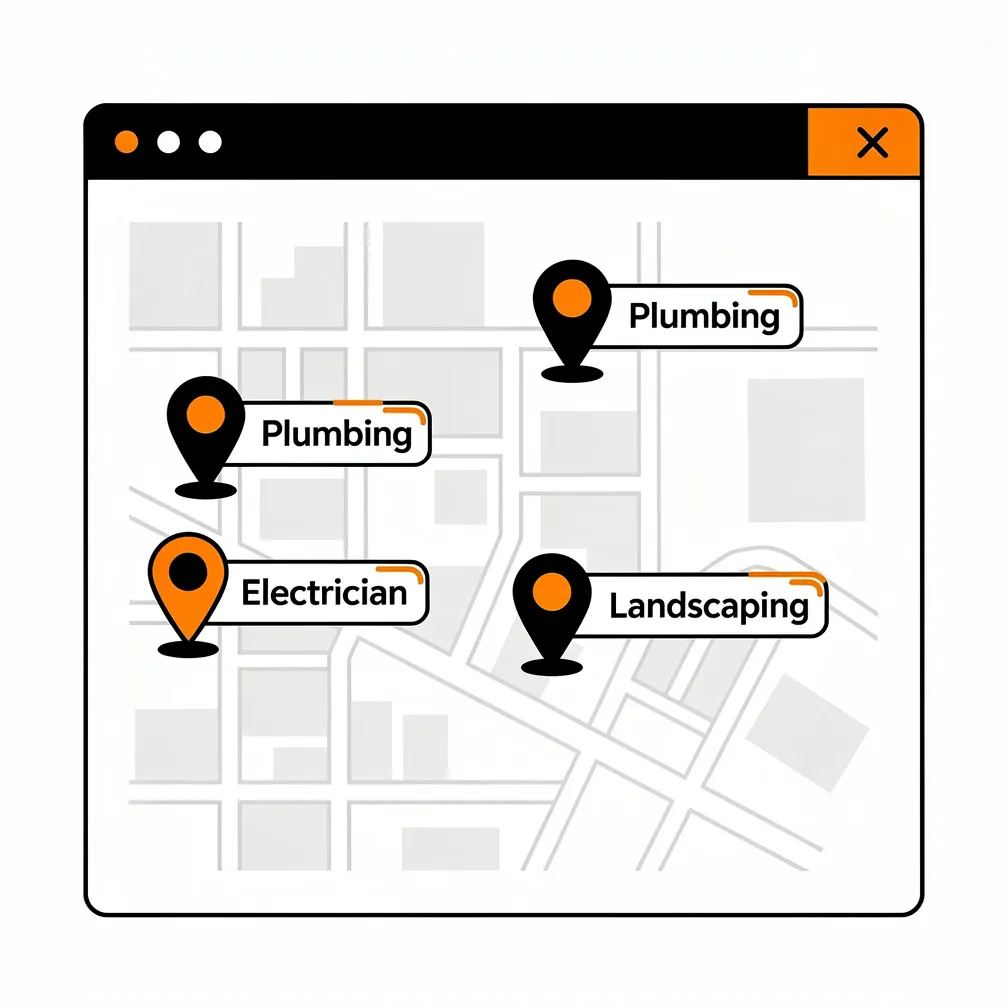
Month two shifts focus toward content depth and citation expansion, building on the foundation established in month one. We develop location pages for your remaining service areas in priority order, applying the same content quality standards as month one while potentially using content templates for markets with similar characteristics. We expand citation presence to twenty to thirty total directories, prioritizing quality sources where your target customers actually search rather than chasing directory quantity. We publish the first set of blog content addressing common customer questions, seasonal service considerations, or local market factors relevant across your service areas. We implement systematic review response processes ensuring every review receives acknowledgment within twenty-four hours, using response templates that maintain consistency while allowing personalization. By the end of month two, you’ll have comprehensive geographic coverage, expanded citation presence, and active content marketing supporting your core service and location pages.
Month three emphasizes authority building through content expansion, local partnerships, and competitive analysis. We audit competitor strategies by analyzing which businesses rank most prominently for your target keywords, evaluating their content depth, citation presence, review volume and quality, and backlink profiles. We develop content clusters addressing specific service specializations or advanced topics that demonstrate subject matter expertise beyond basic service descriptions. We identify and pursue local partnership opportunities including complementary businesses, community organizations, and industry associations that might provide link opportunities or referral relationships. We refine tracking and attribution systems based on the data accumulated during months one and two, adjusting strategy based on what’s working and what’s underperforming. By the end of month three, you’ll have comprehensive local SEO infrastructure operating at a level that most competitors never achieve, creating sustainable competitive advantages that compound through ongoing execution.
The ongoing maintenance rhythm following the initial ninety-day implementation includes weekly review monitoring and response, monthly content publication addressing seasonal topics or frequently asked questions, quarterly citation audits verifying consistency and correcting any errors that emerged, quarterly competitive analysis evaluating market positioning and identifying new opportunities, and continuous optimization based on performance data showing which pages generate the most leads, which service areas perform best, and which content topics resonate most strongly with your audience. This maintenance rhythm requires substantially less time investment than initial implementation while maintaining momentum and preventing the common pattern where businesses execute strong initial optimization then abandon ongoing management, watching their rankings gradually decline as competitors maintain consistent effort.
We recognize that most service business owners lack the time, expertise, or interest to manage these activities directly, which is why we’ve built service packages that handle implementation and ongoing management while keeping clients informed through regular reporting and strategy discussions. Our approach emphasizes transparency about what we’re doing, why it matters, and what results it’s producing, ensuring clients understand the value they’re receiving rather than treating local SEO as a mysterious black box they’re funding without comprehension. We’ve found this transparency builds client relationships that persist for years because clients see concrete evidence that their investment generates measurable business outcomes rather than just activity reports documenting work performed without connecting it to revenue impact.
Service-area businesses face unique local SEO challenges that require specialized strategies beyond generic optimization advice applicable to any business type. The combination of address hiding requirements, geographic coverage complexity, and competition against location-based businesses creates ranking barriers that prevent most service businesses from achieving their full visibility potential. The comprehensive approach outlined in this blueprint—systematic Google Business Profile optimization, strategic service-area page development, technical WordPress implementation, citation architecture, systematic review generation, measurement systems proving ROI, and phased execution preventing overwhelm—provides a realistic path for service-area businesses to overcome these challenges and build sustainable local search visibility that generates consistent lead flow.
WordPress provides an ideal platform foundation for implementing these strategies through its combination of flexible content management, extensive plugin ecosystem supporting specialized local SEO requirements, strong technical SEO capabilities, and accessibility for business owners who want visibility into their web presence without requiring technical expertise. We’ve built our entire agency around the WordPress platform specifically because it provides the right balance of power and usability for the small and medium businesses we serve, and we’ve developed specialized expertise in leveraging WordPress capabilities for local SEO that most general-purpose agencies simply don’t possess.
The businesses that win in local search don’t necessarily provide better services than their competitors—they simply execute better marketing strategies that make their expertise visible to potential customers actively searching for solutions. If you’re tired of watching inferior competitors appear ahead of you in search results because they understand local SEO better than you do, we can help you build and execute comprehensive strategies that prove their value through measurable business outcomes. We invite you to schedule a local SEO consultation where we’ll audit your current visibility, identify your highest-opportunity improvements, and develop a custom strategy aligned with your specific service offerings, geographic markets, and business objectives. Your expertise deserves visibility that matches its quality, and we’re here to build that visibility systematically through strategies that work.
Frequently Asked Questions
Why do service-area businesses like plumbers lose rankings even with great reviews?
Service-area businesses must hide their address on Google Business Profile to avoid customer confusion at home offices, removing a key proximity signal Google relies on for rankings. This creates friction you overcome with strong reviews, location-specific content, and citations. Many skip these, letting competitors win despite your skills—we’ve seen honest operators fix this and jump pages in local searches fast.
When should you hide your business address, and what happens if you don’t?
Hide it if customers never visit your location for services—think plumbers or cleaners serving at homes. Displaying it wrongly (like fake suites) triggers suspensions via Google’s checks. Hybrids with occasional visits can show addresses. Get this right first; it shapes all SEO and prevents lost visibility while you appeal fixes.
How do you create service-area pages on WordPress without duplicate content penalties?
Focus on top cities first, crafting unique content around local codes, weather, projects, and testimonials—not templates. Link from service hubs to location spokes for authority. Add maps, localized FAQs, and CTAs. This proves real presence, ranks for “plumber in [city]” searches, and beats thin content flags that tank sites.
What’s the best way to generate and respond to reviews for better local rankings?
Automate requests right after jobs via text/email with personalized links to Google—aim for 24-hour timing when satisfaction peaks. Respond to every review fast: thank positives specifically, resolve negatives offline professionally. Reviews drive 15% of rankings and 75% of buyer trust, turning browsers into booked jobs.
How can busy owners track if local SEO actually boosts leads and revenue?
Use call tracking like CallRail for dynamic numbers per channel, GA4 for forms, and CRM integration to link leads to bookings/ROI. Track calls, forms, and jobs by source—see organic vs. paid real value. Month 1 foundations prove quick wins, avoiding vanity metrics and focusing spend where leads convert best.